
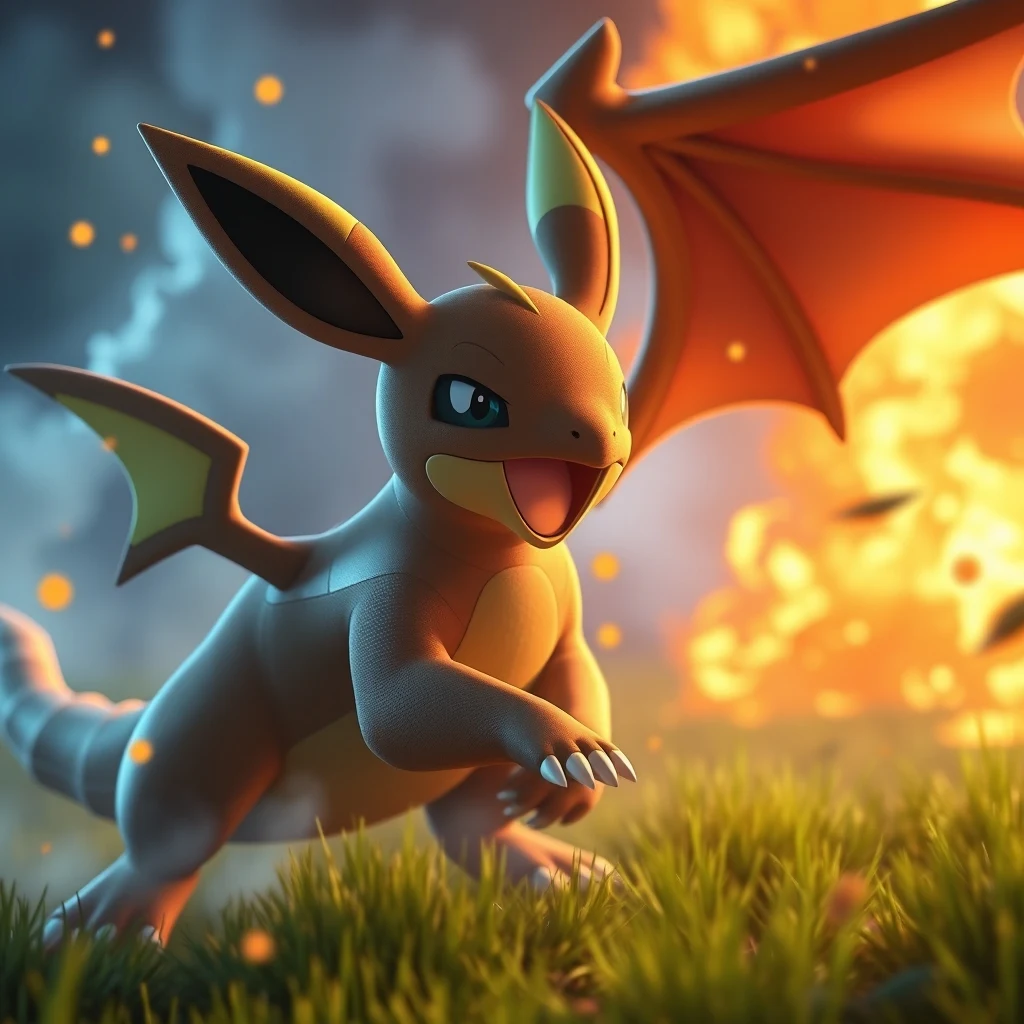
Pokémon’s Battle System May Not Be Turn-Based For Much Longer: A New Era for the Franchise
For nearly three decades, the core identity of the Pokémon franchise has rested on a very specific, reliable foundation: the turn-based battle system. Since the release of Pokémon Red and Blue on the Game Boy in the late 1990s, millions of players have memorized the rhythm of choosing a move, watching their opponent react, calculating type advantages, and hoping for a critical hit. It is a formula that defined an entire genre of Japanese role-playing games (JRPGs) and captured the imaginations of generations.
However, recent industry buzz, combined with subtle shifts in game design from Game Freak and The Pokémon Company, suggests that this iconic formula might be on the chopping block. Recent discussions, heavily sparked by reports and analyses similar to those from outlets like Kotaku, have brought a burning question to the forefront of the gaming community: Is Pokémon finally ready to ditch turn-based combat for good?
At TechRook, we dive deep into the mechanics, the history, and the future of gaming to explore what this potential evolution means for trainers worldwide. Let us break down why Pokémon’s traditional battle system is at a crossroads and what a real-time future could look like.
The Roots of Tradition: Why Turn-Based Combat Defined Pokémon
To understand why a change in the battle system is such a massive deal, we first need to look at why the current system has survived for so long. Turn-based combat was originally chosen out of both design preference and hardware limitations. In the 1990s, handheld consoles simply did not have the processing power to render complex, real-time 3D physics engines or fast-paced action combat.
Instead, Game Freak focused on depth over speed. Pokémon battles were designed to mimic a digital card game or a tactical game of chess. Players had to think several steps ahead:
- Will the opponent switch out their Pokémon?
- Should I use a defensive setup move, or go straight for an attacking blow?
- Does my opponent have a hidden item or a type immunity that will nullify my strategy?
This deliberate pacing created a remarkably deep competitive scene. The official Pokémon Video Game Championships (VGC) grew into a global esports phenomenon built entirely around precise math, tactical prediction, and team synergy. For competitive players, the turn-based nature is not a limitation; it is the canvas upon which strategic masterclasses are painted.
Signs of Change: The Evolution Leading Up to Today
While the mainline series has clung tightly to its turn-based roots, the cracks in the foundation have been showing for years. Game Freak has slowly been testing the waters, trying to see how much freedom players want during encounters. The journey toward real-time or hybrid combat didn't happen overnight; it has been a carefully calculated progression.
1. Spin-Offs and Action Mechanics
For years, spin-off titles were allowed to experiment in ways the mainline series could not. Games like Pokémon Rumble, Pokkén Tournament, and Pokémon Mystery Dungeon introduced real-time movement, button-mashing combos, and dynamic positioning. These games proved that the Pokémon universe translated exceptionally well to active environments, even if purists still viewed them as side content.
2. The Overworld Integration in Let’s Go and Legends: Arceus
The real turning point for mainline-adjacent games came with Pokémon: Let’s Go, Pikachu! and Let’s Go, Eevee!, which removed random encounters entirely and allowed players to see wild Pokémon wandering the grass. This seamless blending of the overworld and combat set the stage for Pokémon Legends: Arceus.
Released in 2022, Legends: Arceus introduced the "Strong Style" and "Agile Style" system. While it was still technically turn-based, the turn order was no longer strictly alternating. Speed stats, move choices, and action counts meant that a nimble Pokémon could attack two or even three times before a slower opponent could blink. It was a chaotic, fast-paced reimagining of the classic formula that received overwhelming praise from fans and critics alike.
3. Scarlet and Violet’s Shift Toward Open-World Freedom
In Pokémon Scarlet and Violet, the franchise took a fully open-world approach. While standard battles remained strictly turn-based, the introduction of the "Let's Go" auto-battle feature allowed players to send their lead Pokémon out to defeat wild monsters in real-time without entering a separate battle screen. This proved that Game Freak was actively looking for ways to speed up the gameplay loop and reduce the friction of mandatory turn-based pacing.
What a Real-Time Pokémon Battle System Would Look Like
If Game Freak decides to take the ultimate plunge and abandon turn-based combat entirely for future mainline titles, what can players expect? Looking at recent industry trends and modern action-RPGs, we can paint a pretty clear picture.
Instead of locking characters into rigid stances where they wait patiently to be hit, future games might adopt a system similar to Final Fantasy VII Remake, Kingdom Hearts, or even Monster Hunter. Here is a breakdown of how key mechanics could transform:
| Classic Turn-Based Mechanic | Potential Real-Time Evolution |
|---|---|
| Speed Stat determines who attacks first. | Real-time movement speed, dodge rolls, and cooldown timers for attacks. |
| Selecting moves from a static menu. | Mapping specific moves to face buttons for fluid combos and quick execution. |
| Switching Pokémon takes a full turn. | Seamless tagging mechanics where secondary Pokémon jump in for assist attacks. |
| Status conditions block turns completely. | Debuffs that slow movement speed, blur vision, or drain stamina over time in real-time. |
Imagine commanding a Charizard in an open field. Instead of choosing "Flamethrower" from a menu and waiting for an animation to play, you would manually guide Charizard to dodge an incoming rock slide, swoop around an opponent's blind spot, and manually breathe fire by timing a button press. It sounds thrilling, cinematic, and deeply immersive—qualities that modern gamers increasingly demand from AAA open-world titles.
The Great Divide: The Community Reaction
Whenever change is whispered about in the Pokémon community, a massive civil war breaks out among fans. The potential removal of the turn-based battle system is no exception. The fanbase is currently split into two distinct camps.
The Purists: If It Ain’t Broke, Don’t Fix It
The traditionalist camp argues that turning Pokémon into an action game strips away what makes it unique. They believe that removing turns turns Pokémon into just another generic action-RPG. Key arguments from this side include:
The Innovators: It’s Time to Modernize
On the other side of the coin, the modernizers argue that Pokémon has fallen behind technologically compared to other modern open-world titles. Their points include:
Can Game Freak Find a Middle Ground?
The good news for worried fans is that game development rarely has to be a black-and-white choice. Game Freak and Nintendo do not necessarily have to alienate the turn-based purists to embrace action combat. In fact, the industry has seen several successful hybrid models in recent years.
One potential path forward is a split franchise model. Game Freak could reserve the mainline series—or a specific sub-series like the Legends games—for fast-paced, real-time action combat, while keeping traditional turn-based mechanics alive through competitive spin-offs, classic remakes, or dedicated tactical modes. This strategy would satisfy both audiences without forcing one side to compromise.
Another option is a tactical pause system. Games like Dragon Age or Final Fantasy XII allowed players to move in real-time, but pause the action instantly to queue up commands, spells, and items. This gives the visual excitement of real-time movement combined with the deep tactical planning of a traditional RPG. A system like this could bridge the gap between casual action fans and hardcore VGC strategists.
The Technical and Financial Pressure on Game Freak
Beyond creative design choices, there is a powerful external force pushing Pokémon toward evolution: market expectations. Pokémon is the highest-grossing media franchise in the entire world. Yet, recent mainline entries like Pokémon Scarlet and Violet faced heavy criticism regarding technical performance, graphical fidelity, and outdated gameplay loops.
Fans and industry critics alike have pointed out that Pokémon games often feel a generation or two behind other major Nintendo flagships like The Legend of Zelda: Tears of the Kingdom or Super Mario Odyssey. While Zelda completely reinvented its formula with open-world survival and physics-based exploration, Pokémon has remained largely tethered to its 1996 roots.
To maintain its staggering cultural dominance and satisfy a gaming public that expects cutting-edge experiences on modern hardware, The Pokémon Company may feel forced to take bold risks. Clinging to turn-based mechanics simply because "that is how it has always been done" may no longer be a viable business strategy in an industry moving at breakneck speed.
What This Means for Competitive Pokémon (VGC)
One of the most fascinating aspects of this potential shift is how it would impact the competitive scene. The Pokémon Video Game Championships have run for well over a decade under strict tournament ruleset guidelines.
If battles transition to real-time, the entire meta will collapse and rebuild from scratch. Instead of calculating damage ranges and speed tiers down to the single decimal point, players would need to master spacing, cooldown management, positioning, and reaction times. While this might terrify longtime competitive veterans, it could also inject a massive shot of adrenaline into the esports scene, attracting entirely new demographics of fighting game and action-RPG players who previously found turn-based games too slow.
However, balancing real-time multiplayer combat for hundreds of different Pokémon with unique move pools, sizes, and hitboxes is a monumental programming nightmare. Game Freak would need to invest heavily in netcode, server stability, and balance patches—areas where the developer has historically struggled.
Final Thoughts: A Bold New Frontier for Trainers
Rumors and reports regarding the death of turn-based Pokémon may feel alarming at first glance, but they are also a sign of a healthy, evolving franchise. Great art and great game design must take risks. Stagnation is the true enemy of longevity.
Whether the next generation of Pokémon games completely abandons the classic battle menu or simply refines the action-heavy concepts tested in Legends: Arceus, one thing is certain: the conversation around how we battle our pocket monsters is heating up. At TechRook, we will be watching every announcement, rumor, and trailer closely to bring you the latest updates as Pokémon stands on the precipice of its biggest revolution yet.
Are you ready to dodge attacks in real-time, or do you prefer to keep things classic with a tactical menu? Let us know your thoughts, and stay tuned to TechRook for more expert gaming journalism and deep dives into the future of technology and entertainment!



0 Comments