
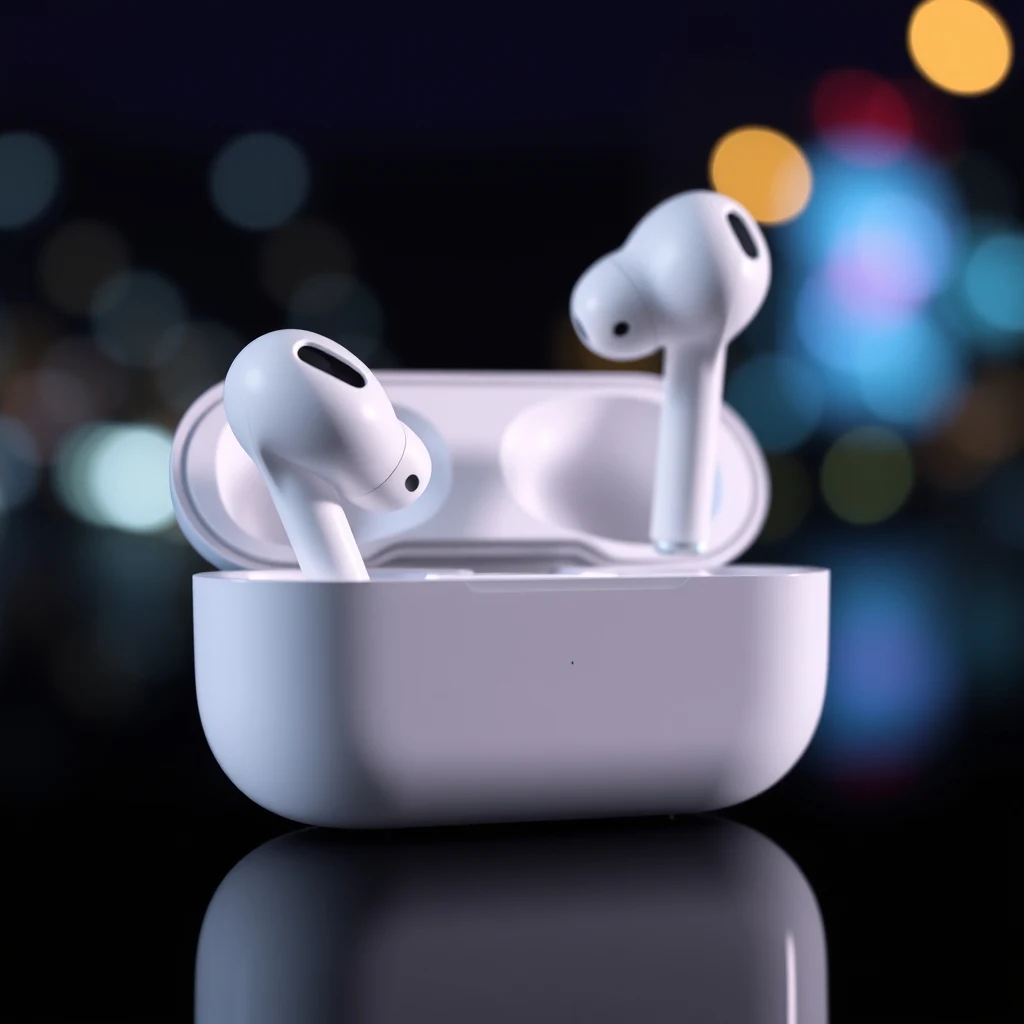
Apple’s Camera-Equipped AirPods Leaked: Everything We Know So Far
Welcome back to TechRook, your ultimate destination for deep dives into the shifting landscapes of consumer technology. Apple has always lived at the intersection of imagination and engineering. From the original iPhone that redefined pocket computing to the Apple Vision Pro introducing spatial computing to the mainstream, Cupertino rarely rests on its laurels. Now, whispers from the supply chain and recent leaks are pointing toward a product concept that sounds straight out of a science fiction blockbuster: AirPods equipped with miniature cameras.
A recent video leak has set the tech community ablaze, showing what appears to be an early prototype or conceptual design of Apple’s iconic wireless earbuds featuring tiny optical sensors embedded within the housing. While Apple remains notoriously tight-lipped about unreleased hardware, the implications of such a device are vast, fascinating, and perhaps slightly unnerving. Today, we are breaking down everything we know about these rumored camera-equipped AirPods, what the leaked video reveals, how this technology could reshape our relationship with AI, and what hurdles Apple must clear before bringing them to market.
The Leak That Started It All: What the Video Shows
The tech rumor mill operates around the clock, but every so often, a leak emerges that forces the industry to pause and reconsider what is possible. The recent footage circulating online showcases a pair of modified or prototype AirPods that look remarkably similar to the current AirPods Pro generation, with one major distinction: discrete, pinhole-sized camera lenses integrated smoothly into the exterior casing of the earbuds.
While the video quality is grainy—as is tradition with early hardware leaks—industry analysts and hardware teardown specialists have analyzed the frame data to assess its authenticity. Although we cannot definitively confirm whether this footage represents an official internal prototype destined for production or a clever concept build by hardware modders, the concept aligns directly with recent patent filings published by the United States Patent and Trademark Office (USPTO).
Apple has patented various iterations of wearable audio devices featuring built-in optical sensors for years. These patents describe systems where cameras do not necessarily record traditional video for playback, but instead capture environmental data to assist with spatial awareness, context recognition, and spatial audio calibration. Seeing this concept visualised in a leaked video brings the reality of camera-packing hearables one step closer to our daily lives.
Why Would AirPods Need Cameras? Decoding Apple’s Vision
At first glance, strapping cameras to a pair of wireless earbuds sounds redundant. After all, most of us carry a powerful multi-lens camera system inside our pockets everywhere we go via our smartphones. However, thinking of these rumored AirPods as traditional cameras misses the bigger picture. Apple is building an interconnected ecosystem where hardware, machine learning, and spatial computing converge.
Here are the primary use cases driving the development of camera-equipped AirPods:
- Enhanced Spatial Audio and Head Tracking: Current AirPods utilize built-in accelerometers and gyroscopes to track head movement and adjust spatial audio. Adding visual sensors could allow the earbuds to map the acoustic properties of a room in real-time, delivering hyper-accurate sound staging tailored precisely to your physical environment.
- Apple Intelligence and Visual Context: With the rollout of Apple Intelligence, the company is leaning heavily into contextual AI. Imagine walking down a street, looking at a landmark, and asking Siri a question about it. Because the cameras on the AirPods face outward from your ears, your natural head turns would give the AI assistant a direct line of sight to what you are looking at, enabling truly hands-free contextual queries.
- Integration with Vision Pro and Spatial Computing: The Apple Vision Pro is a marvel of engineering, but wearing a headset all day is not practical for everyone. Camera-equipped AirPods could act as lightweight companion devices, feeding spatial data back to your primary devices or enhancing augmented reality experiences without requiring a bulky headset.
- Health and Gesture Controls: Future wearables are moving toward biometric tracking and subtle input methods. Outward or inward-facing sensors could monitor micro-expressions, posture, or enable advanced gesture controls where a simple glance or subtle head movement performs actions on your paired devices.
The Evolution of the Hearable: From Music to Multimodal AI
To truly understand why Apple is exploring camera-equipped AirPods, we must look at how the humble earbud has evolved over the last decade. When Apple introduced the original AirPods in 2016, critics mocked the stem design. Yet, they fundamentally changed how the world consumes audio, practically killing the wired headphone market overnight.
Over successive generations, Apple transformed AirPods from simple wireless Bluetooth receivers into sophisticated health and audio powerhouses. Features like Active Noise Cancellation (ANC), Transparency Mode, Adaptive Audio, Conversation Awareness, and clinical-grade hearing aid capabilities turned AirPods into essential health and lifestyle tools.
Integrating optical sensors is the next logical step in this evolutionary chain. The tech industry is currently transitioning from screen-first interaction models to multimodal AI interfaces—systems that can see, hear, and speak with us concurrently. While smart glasses like Ray-Ban Meta glasses have proven that consumers are willing to wear cameras on their faces, putting cameras in our ears offers a more discreet, ubiquitous alternative for users who already wear audio gear daily.
Potential Challenges and Hurdles for Apple
While the prospect of camera-toting AirPods sounds futuristic and exciting, Apple faces a mountain of engineering, economic, and social challenges before this product can hit store shelves.
1. Battery Life and Thermal Management
AirPods are remarkably small. Fitting batteries, audio drivers, H-series chips, microphones, and Bluetooth antennas into a housing that fits comfortably inside the human ear canal is already an incredible feat of micro-engineering. Adding optical sensors, image signal processors (ISPs), and the computational power required to process visual data will place a heavy burden on battery life and thermal output. Consumers expect their AirPods to last for hours of continuous playback; draining the battery in twenty minutes due to camera usage would render the feature dead on arrival.
2. Privacy Concerns and Social Acceptance
Privacy is arguably the steepest hurdle Apple must clear. Google Glass famously failed years ago in part because people felt uncomfortable around individuals wearing recording devices in public spaces, leading to the derogatory term "Glasshole." Smart glasses face similar scrutiny today. If consumers are sensitive to cameras built into glasses frames, how will society react to cameras embedded in someone's ears? Apple will need to implement unmistakable indicator lights, robust software safeguards, and clear privacy policies to ensure users and bystanders feel secure.
3. Durability and Weather Resistance
Earbuds endure harsh conditions. They collect earwax, sweat during workouts, get dropped on pavement, and get caught in rainstorms. Adding sensitive optical lenses to a device subjected to such daily wear and tear introduces significant durability challenges. Apple must ensure that these camera lenses remain scratch-resistant, clean, and waterproof without compromising audio quality or acoustic sealing.
Market Impact: What Competitors Are Doing
Apple does not exist in a vacuum. The wearable tech market is hyper-competitive, with giants like Samsung, Sony, Bose, and Meta constantly pushing the envelope. Meta’s recent pushes into AI-powered glasses have captured significant market share and consumer goodwill, proving that wearable AI is not just a passing fad.
If Apple successfully launches camera-equipped AirPods, it will force competitors to pivot their hardware strategies. Rather than building standalone smart glasses, other tech ecosystems might race to add optical sensors to their own wireless earbud lineups. This could spark a brand-new subcategory within consumer electronics: the AI-powered visual hearable.
Comparing Wearable Form Factors
To help you visualize where camera-equipped AirPods fit into the broader tech ecosystem, let us compare them against existing wearable form factors:
| Wearable Device | Primary Input Method | Visual Capability | Discretion Level |
|---|---|---|---|
| Smartphones | Touchscreen & Voice | High (Multiple Lenses) | Low (Requires holding a device) |
| Smart Glasses | Voice & Touch Panels | High (Outward-facing cameras) | Medium (Noticeable frame design) |
| Spatial Headsets (Vision Pro) | Eye tracking & Hand gestures | Extremely High (Passthrough & mapping) | Very Low (Bulky headset) |
| Rumored Camera AirPods | Audio & Head Movement | Moderate (Context & spatial mapping) | High (Blends into everyday audio gear) |
When Can We Expect to See Them?
As with all major Apple rumors, managing expectations regarding release timelines is crucial. Industry supply chain analysts, including notable figures like Ming-Chi Kuo and Bloomberg’s Mark Gurman, have suggested that while research and development into camera-equipped AirPods are actively underway, mass production is likely still a few years away.
Some optimistic reports point toward a potential late 2026 or 2027 release window, but hardware complexities could easily push timelines further back. Apple is notoriously patient when it comes to adopting new form factors; they rarely rush a product to market simply to be first. Instead, they wait until the hardware, software ecosystem, and battery technology align to deliver a seamless user experience.
Final Thoughts: A Glimpse Into Tomorrow
The leaked video of camera-equipped AirPods offers a tantalizing glimpse into the future of personal technology. Whether this exact prototype makes it to store shelves next year or remains an experimental stepping stone in Apple’s R&D labs, one thing is abundantly clear: the boundary between our physical reality and digital assistance is blurring.
At TechRook, we will continue monitoring these leaks, patent filings, and industry developments closely. As wearables evolve from simple accessories into active participants in our daily lives, staying informed is the best way to navigate the road ahead.
What are your thoughts on camera-equipped AirPods? Would you feel comfortable wearing earbuds that can see your surroundings, or do you think Apple is crossing a line into privacy intrusion? Let us know your thoughts, and stay tuned to TechRook for all the latest breaking tech news, reviews, and deep dives!



0 Comments