
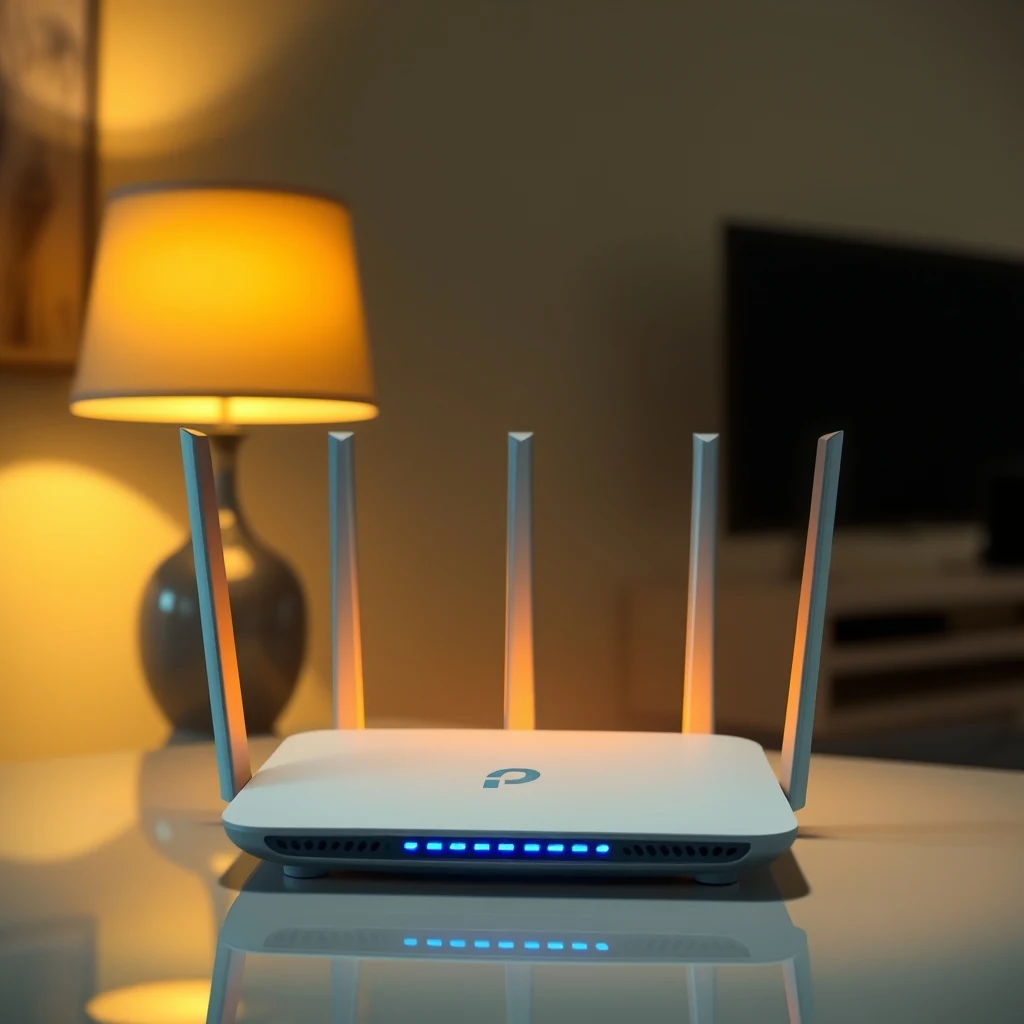
TP-Link’s First Wi-Fi 8 Router Is Almost Here: What You Need to Know About the Next Era of Wireless Speed
Welcome back to TechRook, your ultimate destination for all things technology. If you feel like you just upgraded your home network to Wi-Fi 7, you might want to brace yourself. The tech world moves at a breathtaking pace, and the horizon is already shifting toward the next generation of wireless communication. Recent industry reports, notably highlighted by The Verge, reveal that TP-Link is preparing to launch its very first Wi-Fi 8 router.
While mainstream adoption of Wi-Fi 7 is still ongoing and many households are just beginning to experience multi-gigabit wireless speeds, manufacturers are already looking ahead. The standardization of IEEE 802.11bn—officially known as Wi-Fi 8 or Extremely High Throughput (EHT)—is well underway. TP-Link, always a pioneer in consumer networking hardware, is positioning itself at the absolute forefront of this technological leap.
In this comprehensive guide, we will break down what we know so far about TP-Link’s upcoming Wi-Fi 8 initiative, explore what Wi-Fi 8 actually aims to achieve, and discuss whether you should start saving your pennies now or stick with your current setup. Grab a cup of coffee, settle in, and let us dive deep into the future of wireless networking.
Understanding the Evolution: From Wi-Fi 7 to Wi-Fi 8
Before we examine the upcoming hardware, it is crucial to understand the philosophy behind Wi-Fi 8. For decades, wireless standards have primarily focused on a singular, relentless pursuit: raw speed. Every new generation promised bigger numbers, broader channels, and higher frequencies to push more data through the air faster than ever before.
Think about how your home network has evolved:
- Wi-Fi 5 (802.11ac): Brought reliable streaming and widespread dual-band connectivity to the masses.
- Wi-Fi 6 and 6E (802.11ax): Introduced OFDMA and MU-MIMO improvements to handle congested environments, alongside the uncluttered 6GHz frequency band.
- Wi-Fi 7 (802.11be): Doubled channel widths up to 320MHz, introduced Multi-Link Operation (MLO), and delivered ultra-low latency.
However, Wi-Fi 8 takes a fascinating philosophical pivot. While it will certainly be faster than its predecessors, its primary design goal is not just raw peak speed. Instead, Wi-Fi 8 focuses heavily on reliability, ultra-low latency, and consistency in dense, highly congested environments. The IEEE refers to this standard officially as Ultra High Reliability (UHR).
Imagine having dozens of smart home gadgets, heavy 4K and 8K streaming devices, cloud gaming rigs, and remote work video calls running simultaneously without a single stutter. That is the exact problem Wi-Fi 8 is engineered to solve.
What TP-Link’s Upcoming Wi-Fi 8 Router Means for Consumers
TP-Link has built a reputation for democratizing cutting-edge networking technology. Through their popular Archer and Deco product lines, they consistently manage to bring enterprise-grade features into consumer-friendly packages at competitive price points. Their early foray into Wi-Fi 8 suggests they intend to repeat this winning strategy.
Although exact specifications, model numbers, and pricing details are still tightly under wraps as development finalizes, industry insiders and leaks point to several key architectural features we can expect from TP-Link’s initial hardware lineup:
1. Advanced Multi-Link Operation (Enhanced MLO)
While Wi-Fi 7 introduced basic MLO—allowing devices to transmit and receive data across multiple frequency bands simultaneously—Wi-Fi 8 is set to refine this feature significantly. TP-Link’s upcoming hardware will likely feature advanced dynamic switching, ensuring that packets take the absolute cleanest, fastest, and most interference-free path through the airwaves in real-time.
2. Dynamic Resource Allocation
In a typical modern household, bandwidth is a precious commodity. TP-Link’s new routers are expected to incorporate sophisticated algorithms powered by onboard neural processing units (NPUs). These systems will intelligently prioritize mission-critical traffic, such as competitive cloud gaming or emergency work calls, over background downloads without requiring manual Quality of Service (QoS) configurations.
3. Superior Mesh Integration
TP-Link dominates the mesh market with its Deco systems. The introduction of Wi-Fi 8 architecture will revolutionize how mesh nodes talk to each other. Dedicated backhaul connections will become virtually lossless, meaning your satellite nodes will deliver the exact same gigabit speeds as if you were plugged directly into the primary router via an Ethernet cable.
The Technical Leap: How Wi-Fi 8 Fixes Real-World Problems
To truly appreciate why TP-Link’s announcement is making waves across the tech community, we need to look at the real-world friction points of modern wireless networks. Even with Wi-Fi 7 routers, users in crowded urban areas often experience intermittent drops in connection quality. This happens not because the router lacks power, but because of environmental interference from neighboring networks, physical walls, and competing devices.
Wi-Fi 8 addresses these issues through several groundbreaking technological enhancements:
| Feature | Wi-Fi 7 Standard | Wi-Fi 8 (UHR) Focus |
|---|---|---|
| Primary Objective | Peak throughput and 320MHz channels | Extreme reliability and consistent latency |
| Interference Handling | Basic spatial reuse | Coordinated Access and advanced beamforming |
| Client Handover | Standard roaming protocols | Seamless, zero-packet-loss roaming between access points |
| Congestion Management | Efficient MU-MIMO | Distributed multi-access coordination |
By shifting the focus toward coordinated access points, Wi-Fi 8 routers will be able to "talk" to neighboring routers to avoid stepping on each other's frequencies. If you live in an apartment building where dozens of wireless networks overlap, TP-Link’s upcoming router will act like an expert traffic controller, ensuring your connection remains smooth and uninterrupted.
Is It Too Early for Wi-Fi 8? A Realistic Perspective
Whenever a tech publication like The Verge reports on next-generation hardware developments, a common panic sets in among consumers who just invested in the latest gear. "Did I buy obsolete technology?" is the immediate question on everyone's lips.
Let us set the record straight: No, your current Wi-Fi 6, 6E, or Wi-Fi 7 router is not suddenly obsolete.
The transition from a newly ratified standard to consumer availability is a gradual marathon, not a sprint. Consider the timeline of previous generations:
- Standardization Phase: The IEEE drafts and refines the technical specifications over several years.
- Hardware Prototyping: Manufacturers like TP-Link build early engineering samples and testbeds. This is the stage we are currently entering.
- Regulatory Approval: FCC and international telecom bodies review the hardware and operational frequencies.
- Commercial Launch: Early adopter consumer devices hit the market, typically commanding premium pricing.
- Ecosystem Maturation: Client devices (smartphones, laptops, TV streaming boxes) begin shipping with native support for the new standard.
Because client device adoption always lags behind router releases, buying a Wi-Fi 8 router on day one means you will primarily experience backwards-compatible performance with your existing Wi-Fi 6 and 7 devices. While you will still benefit from improved internal processing and range, you will not unlock the full, generational potential of Wi-Fi 8 until you upgrade your smartphones, laptops, and smart home appliances down the line.
What Should You Do Right Now?
If you are currently struggling with a sluggish, outdated Wi-Fi 5 router or dealing with frustrating dead zones in your home, do not wait for Wi-Fi 8. Waiting for technology that is still months or years away from mainstream consumer maturity means enduring poor connectivity today.
Here is a simple roadmap to help you decide your next networking move:
- If you have Wi-Fi 5 or older: An immediate upgrade to a quality Wi-Fi 6E or Wi-Fi 7 system will feel like night and day. You will experience immediate improvements in speed, range, and device capacity.
- If you already have a robust Wi-Fi 7 setup: Sit back and relax. Your network is future-proofed for the next several years, easily capable of handling heavy workloads, high-bandwidth gaming, and streaming.
- If you are a hardcore tech enthusiast: Keep a close eye on TechRook for upcoming announcements, hands-on reviews, and benchmark tests as TP-Link draws closer to the official commercial release of their pioneering Wi-Fi 8 hardware.
Looking Ahead: The Future of Connected Homes
The announcement that TP-Link’s first Wi-Fi 8 router is on the horizon is an exciting milestone for the tech industry. It signals that wireless technology is maturing past the simple race for bigger speed metrics and focusing on what truly matters to everyday users: seamless, unbreakable connectivity.
As our homes become smarter, our work lives become more hybrid, and our entertainment demands grow heavier, our networking infrastructure must evolve. TP-Link’s proactive approach ensures that consumers will have access to the absolute cutting edge of reliability and performance as soon as the standard solidifies.
Thank you for reading this deep dive on TechRook. Make sure to bookmark our site, subscribe to our newsletter, and follow our daily feeds for continuous updates, expert reviews, and breaking tech news as the story of Wi-Fi 8 unfolds.



0 Comments