
I Wore Snap’s $2,200 Smart Glasses: A Hands-On Reality Check
For years, technology enthusiasts and everyday consumers alike have dreamed of a future where our digital lives seamlessly blend with the physical world. We have seen countless prototypes, futuristic concepts, and expensive failures from giants across the tech industry. Yet, the dream of true, all-day augmented reality (AR) remains largely elusive. Enter Snap, the company best known for its disappearing messages and playful camera filters, attempting to leapfrog the entire consumer market with a device carrying a jaw-dropping price tag of $2,200.
When I first slipped Snap’s latest AR glasses onto my face, I was acutely aware of that steep price. At $2,200, these aren't just consumer gadgets; they sit firmly in the professional, developer-first tier of hardware. But as I navigated virtual interfaces floating right in front of my living room, I realized this wasn't just another incremental upgrade to the Spectacles of the past. This is a bold, uncompromising glimpse into what wearable computing could eventually become—if we can figure out how to afford it, power it, and wear it in public without feeling entirely ridiculous.
The Evolution of Spectacles: From Toy to Tool
To understand where Snap is today, we have to look back at where it started. The original Snapchat Spectacles were colorful, quirky recording devices meant for capturing a first-person perspective for social media. They were fun, relatively affordable accessories for teenagers and influencers. Subsequent iterations added basic AR capabilities, allowing users to overlay digital effects onto physical spaces through the lenses, but the field of view was always frustratingly narrow, like looking through a tiny window into a digital world.
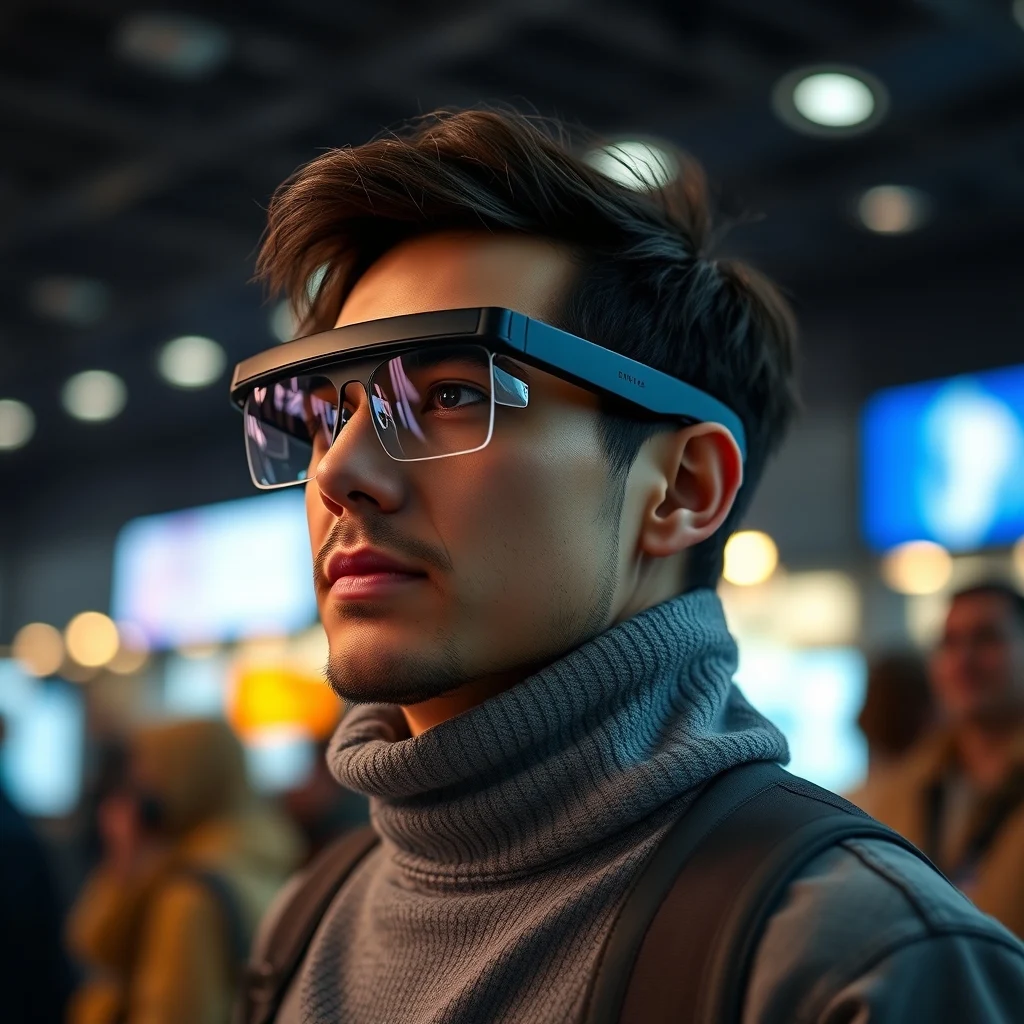
The newest iteration, however, represents a massive paradigm shift. Snap has moved away from the casual toy aesthetic and built something that feels much more robust, albeit still futuristic. The frames are noticeably thicker than standard eyeglasses, housing complex optical waveguides, micro-projectors, and various sensors that track both your hands and your environment. When you hold them, they feel dense with technology. They are heavier than traditional frames, but engineered well enough that the weight distribution doesn't immediately crush the bridge of your nose.
However, wearing them in public is still an experience that demands a certain level of confidence. While tech enthusiasts will look at you with awe and curiosity, the average person on the street might mistake them for a bulky, sci-fi prop. Snap is not yet mass-market ready with this specific hardware, and at $2,200, they aren't pretending to be.
Design and Hardware: Engineering the Impossible
Creating lightweight AR glasses is one of the hardest engineering challenges in modern technology. You need to pack the processing power of a smartphone, advanced optics, cameras, and batteries into a frame that sits comfortably on a human face for hours. Snap’s hardware team has done an admirable job, though physical compromises are inevitable.
Let's break down the core hardware components that make these glasses tick:
- Optical Waveguides: The lenses are thick glass panels that bounce light from micro-projectors directly into your retinas, creating the illusion of holograms floating in space.
- Hand Tracking Sensors: Multiple inward and outward-facing cameras track your hand gestures, allowing you to tap, swipe, and pinch virtual buttons in mid-air.
- Custom Processing Architecture: Powered by specialized silicon designed to handle heavy spatial computing workloads without melting against your temples.
- Integrated Audio: Open-ear directional speakers that let you hear digital sound effects and voice assistants while remaining completely aware of your surroundings.
Despite this impressive spec sheet, the physical design reveals the current limitations of physics and battery chemistry. The battery life is, frankly, a major bottleneck. During my rigorous testing sessions, I found myself tethered to a charger after roughly 45 minutes of continuous, heavy AR usage. For a device costing more than a high-end laptop, that limitation is tough to swallow. You simply cannot wear these all day as a replacement for your prescription glasses. They are meant for specific, task-oriented bursts of spatial computing.
Stepping Into Augmented Reality: The Software Experience
Hardware is only half the battle. The true magic of any AR device lies in its software ecosystem. Putting on Snap’s glasses and booting up their spatial operating system is genuinely breathtaking the first time you experience it. Instead of staring down at a glowing rectangle in your hand, your entire living room becomes the canvas.
I tested several custom Lenses built specifically for this hardware tier. One allowed me to place interactive 3D objects on my coffee table—a roaring virtual campfire that flickered realistically and cast digital light onto the wooden surface. Another application let me pull up multiple floating browser windows around my kitchen while I cooked, pinning a recipe to the refrigerator door digitally so it stayed in view as I moved around.
The hand-tracking interface is where Snap truly shines. Traditional AR/VR headsets often rely on bulky controllers, but Snap wants your body to be the controller. Pinching your thumb and index finger together acts as a mouse click. Swiping your hand navigates menus. For the most part, this interaction model feels natural and futuristic. You feel like Tony Stark interacting with Jarvis. However, it is not without friction. If the room lighting is too dim or too bright, the tracking stutters. Occasionally, virtual buttons would fail to register my pinch, leading to a momentary break in the illusion.
Furthermore, the field of view—while vastly improved over older Spectacles—still cuts off at the edges of your peripheral vision. You quickly learn to turn your head to look at objects rather than just moving your eyes, because if a digital window drifts too far to the side, it simply vanishes into thin air.
Who is the $2,200 Price Tag For?
Let address the elephant in the room: the price. At $2,200, these glasses are priced well out of reach of the average Snapchat user. So, who is actually buying them?
Right now, Snap is targeting this hardware specifically at developers, enterprise creators, and early-adopter tech enthusiasts. The company wants top-tier creators to build the ecosystem before the technology trickles down to cheaper, more consumer-friendly iterations in the coming years. Think of this device not as a finished product you buy at your local electronics store, but as a developer kit akin to the early days of Oculus VR.
To provide a clearer picture of how this device compares to other spatial computing options on the market, consider the following comparison:
| Device | Estimated Price | Form Factor | Primary Focus |
|---|---|---|---|
| Snap Smart Glasses | $2,200 | Lightweight Glasses | Developer / Social AR |
| Apple Vision Pro | $3,499 | Fully Enclosed Headset | Spatial Entertainment / Productivity |
| Meta Quest 3 | $499 | Mixed Reality Headset | Gaming / General VR/MR |
As the table shows, Snap occupies a very specific niche. It is lighter and much more socially acceptable to wear in public spaces than a heavy VR headset or a fully enclosed ski-goggle design like the Vision Pro, but it sacrifices processing power, battery life, and high-resolution immersion to achieve that sleek form factor.
The Challenges Ahead for Snap
Spending a few days with Snap’s high-end glasses gave me an appreciation for the mountain of obstacles the company must climb if it wants to mainstream augmented reality. It is not just about making the hardware cheaper; it is about solving fundamental technological barriers.
First, thermal management is a constant battle. Because the arms of the glasses house powerful processors close to your skin, they can get uncomfortably warm during extended usage. Engineers have to balance raw computing power against passive cooling limits.
Second, outdoor visibility remains a thorn in the side of waveguide technology. While the virtual graphics look vibrant and crisp inside a dimly lit room or an office, stepping out into bright, direct sunlight washes out the projections entirely. Until micro-projectors can outshine the sun without draining a battery in five minutes, true all-day outdoor AR will remain out of reach.
Finally, there are profound privacy and social implications. Even though these glasses are targeted at developers, wearing a camera-equipped device on your face in public inevitably raises eyebrows. People do not want to feel like they are being secretly recorded while having a casual conversation with you. Snap has included recording indicator lights, but social norms around smart eyewear are still being written in real-time.
The Verdict: A Glimpse of the Future Worth Watching
My time with Snap’s $2,200 smart glasses was equal parts thrilling and frustrating. On one hand, the technology feels like undeniable magic. The ability to summon a 3D interface out of thin air using nothing more than your hands is the kind of science fiction we were promised decades ago. When it works smoothly, it genuinely alters how you perceive your immediate environment.
On the other hand, the reality of short battery life, a limited field of view, thermal issues, and a barrier-breaking price tag reminds us that we are still in the awkward teenage years of augmented reality. These glasses are not meant for everyday consumers today, and Snap knows it.
If you are a developer or an enterprise looking to experiment on the bleeding edge of spatial computing, and you have deep pockets, this device offers an exciting look at what is possible. For everyone else, keep your eyes on Snap. The technology inside these expensive frames is paving the way for a lighter, cheaper, and vastly more polished pair of glasses that will eventually change how we interact with the digital world—perhaps sooner than we think.



0 Comments