
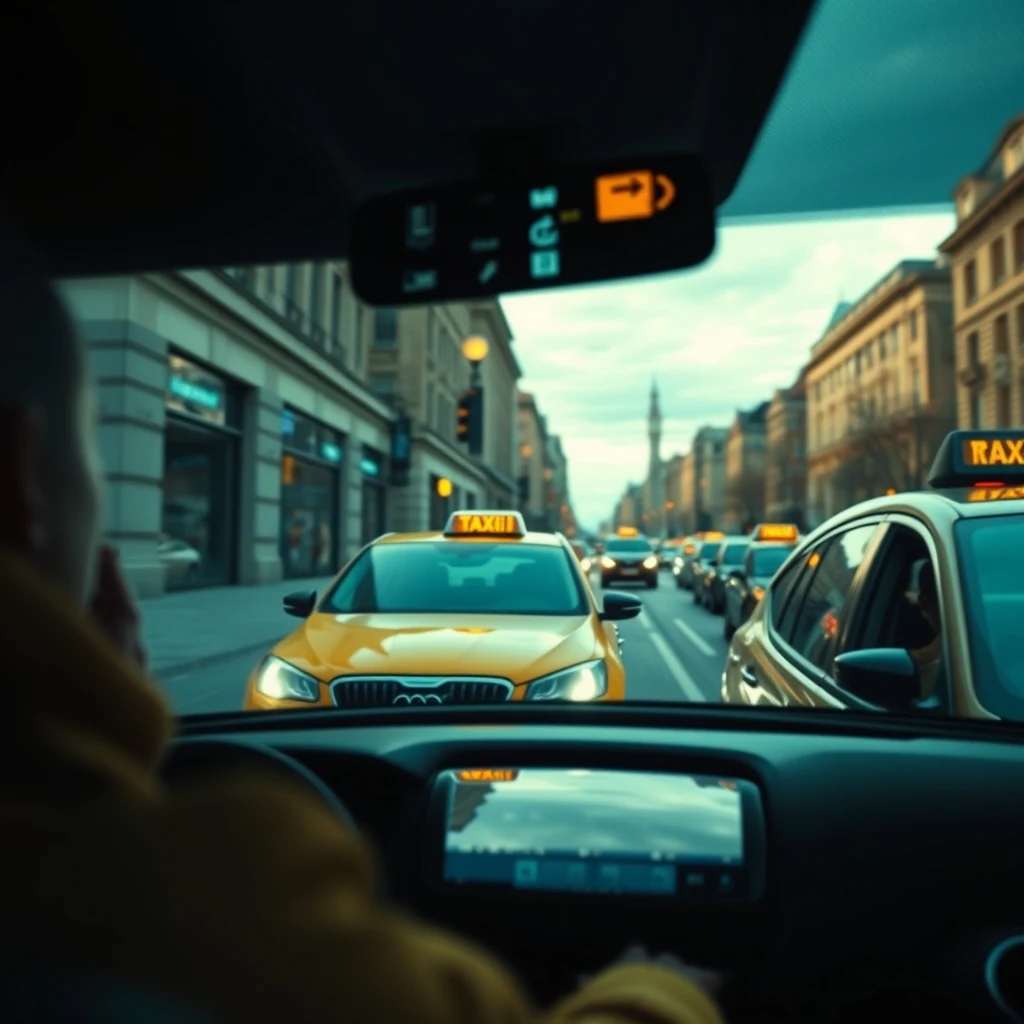
London's bustling, historic streets are officially becoming the staging ground for one of the most exciting transportation experiments of the twenty-first century. If you have opened your Uber app recently while standing near Piccadilly Circus, Shoreditch, or Canary Wharf, you might have wondered whether your next journey could arrive without a human steering the wheel. Thanks to a landmark partnership between ride-hailing giant Uber and British artificial intelligence pioneer Wayve, autonomous passenger journeys have transitioned from theoretical research papers straight onto the asphalt of the UK capital.
However, hailing one of these cutting-edge autonomous vehicles is not quite as simple as tapping a button and expecting an immediate pickup. With an intentionally small test fleet hitting the roads during the pilot phase, securing a seat inside one of these futuristic rides requires insider knowledge, strategic timing, and a clear understanding of how the trial operates. In this comprehensive guide, we will explore everything you need to know about the Uber-Wayve London rollout and explain exactly how to maximize your chances of riding in one of London's first driverless taxis.
The Uber and Wayve Partnership: A Major Milestone for London Mobility
Before diving into the exact steps to land a ride, it is worth understanding why this rollout represents such a massive leap forward for both technology and urban mobility. While companies like Waymo and Cruise have spent years operating autonomous fleets across wide, grid-based American cities such as Phoenix, San Francisco, and Austin, London presents an entirely different challenge.
London is infamous among roboticists and automotive engineers for its uniquely chaotic driving environment. Between ancient Roman road layouts, narrow winding streets, aggressive cyclists, iconic red double-decker buses, erratic delivery couriers, and unpredictable British weather, navigating London requires nuanced human intuition. That is precisely why Wayve's entry into the passenger market alongside Uber is making international headlines.
Rather than relying strictly on pre-mapped digital corridors and rigid geometric rulebooks, Wayve brings an artificial intelligence foundation model approach to driving. By teaming up with Uber's vast dispatch network, the two companies are testing whether next-generation autonomous software can safely and smoothly transport everyday passengers across one of the most demanding metropolitan transit hubs on Earth.
Understanding the Pilot: Numbers, Vehicles, and Safety Measures
To set realistic expectations, you must understand the scale of the initial trial. This rollout is not an overnight replacement of tens of thousands of licensed private hire vehicles across Greater London. Instead, it is a meticulously managed pilot program designed to validate safety, refine algorithms, and measure passenger comfort.
- Fleet Size: The pilot is launching with a boutique fleet of just 15 specially converted vehicles. Because the vehicle count is tightly restricted, organic match rates across millions of daily London Uber requests will naturally be low.
- The Platform: Every autonomous vehicle in this rollout is a high-spec, fully electric Ford Mustang Mach-E. These vehicles have been retrofitted with Wayve's proprietary sensor arrays, high-resolution cameras, and advanced compute platforms.
- Safety Operators Onboard: While the vehicles operate autonomously, every single car in the initial phase carries a fully trained safety driver behind the wheel. These human safety operators continuously supervise the vehicle's decision-making and can take immediate manual control if necessary.
- Service Integration: The pilot does not require a separate bespoke app. It is woven directly into the standard consumer Uber application, allowing autonomous rides to blend into ordinary ride-hailing traffic.
How to Boost Your Chances of Hailing an Autonomous Uber in London
With only 15 Wayve-equipped Ford Mustang Mach-E vehicles operating across a city of nine million people, your odds of hailing an autonomous ride by pure chance might feel like winning a small lottery. Nevertheless, you can dramatically tilt the odds in your favor by understanding the operational footprint and behavioral patterns of the pilot fleet. Follow these strategic tips to optimize your chances.
1. Target Known Testing Hubs and Commercial Corridors
Autonomous vehicle pilots rarely disperse evenly across every suburban corner of Greater London. Instead, trials are geofenced around carefully selected zones where road data has been extensively validated and infrastructure supports testing. To increase your odds, place your ride requests within and between London's primary commercial and tech-heavy boroughs.
Historically, autonomous vehicle testing in London focuses on areas such as:
- Tech City and East London: Shoreditch, Old Street, Hackney, and Stratford.
- Central Business Districts: The City of London, Southwark, and Canary Wharf.
- West End and Innovation Districts: Westminster, Camden, and King's Cross.
If you request an Uber from an outer borough like Croydon, Enfield, or Bromley, you will be dispatched a standard human-driven vehicle. Stick to central transit corridors where testing operations are densest.
2. Request Rides During Core Daytime Operating Windows
Unlike standard Uber drivers who often work graveyard shifts or late-night weekend party hours, autonomous testing fleets follow structured operational schedules. Safety drivers, research engineers, and fleet monitoring teams generally operate during controlled daytime and early evening shifts.
To catch a vehicle in active service, book your rides during the following windows:
- Mid-Morning (10:00 AM – 12:00 PM): After the chaotic morning rush hour subsides, testing vehicles frequently hit the road for smooth operational data collection.
- Mid-Afternoon (1:30 PM – 4:00 PM): Before the intense evening commute gridlock begins, testing activity is typically at its peak.
- Early Evening (6:30 PM – 8:30 PM): Useful for testing dynamic lighting conditions as day turns to dusk, while fleet engineers remain on duty.
Booking a ride at 2:30 AM outside a nightclub in Soho will almost certainly connect you to a regular vehicle, as pilot cars are typically parked at recharging depots overnight for maintenance and data offloading.
3. Keep Your Uber App Updated and Check Feature Permissions
Uber constantly rolls out localized software updates to test new features. If you are running an outdated version of the app, you could miss out on the autonomous dispatch algorithm altogether.
Take the following steps to ensure your account is ready:
- Open your smartphone's app store and update the Uber application to the latest version.
- Verify that your location services are set to "Always Allow" or "While Using App" with precise location tracking enabled.
- Check your in-app settings and notifications. When pilots launch in your area, Uber often presents an in-app prompt or email asking if you wish to participate in autonomous vehicle testing. Make sure you opt in immediately.
4. Choose the Standard UberX Tier
When booking your journey, select the standard UberX or Uber Green category. Autonomous pilots are typically deployed directly into the mass-market UberX booking pool to test real-world consumer behavior. If you request high-end specialty tiers like Uber Exec, Uber Lux, or large-capacity options like Uber XL, the dispatch algorithm will exclude the 5-seater Mustang Mach-E test fleet from your matching queue.
5. Book Medium-Distance, Cross-Borough Urban Routes
Fleet operators prioritize routes that produce valuable, diverse training data for their autonomous driving models. Ultra-short rides of two or three blocks might be rejected by the dispatch system in favor of longer, more complex urban segments that challenge the vehicle's perception systems.
Aim for routes between two and five miles that navigate complex intersections, roundabout systems, and varied street layouts. A trip from King's Cross to Southwark, or from Shoreditch to Covent Garden, represents the exact type of rich driving route that research programs prioritize.
How Wayve's "Embodied AI" Technology Works
To appreciate what makes riding in an Uber-Wayve taxi so remarkable, you need to understand the fundamental shift in technology powering these vehicles. For years, the autonomous vehicle industry was dominated by the "robotics approach," which relies on extremely detailed high-definition (HD) 3D maps, rigid rule-based code, and costly LiDAR sensor arrays.
Wayve takes a fundamentally different path known as End-to-End Embodied Artificial Intelligence (often referred to as AV 2.0). Instead of teaching a car thousands of strict hand-coded rules (such as "if an object is 3 meters away, brake with X pressure"), Wayve trains large-scale foundation models on massive volumes of real-world driving footage and expert human driving behavior.
This allows the vehicle to "see," "think," and "act" similarly to a human driver. The AI learns generalizable concepts—such as how to navigate around double-parked delivery vans, yield politely to pedestrians making unexpected movements, or navigate road construction zones where lane lines have been completely erased.
| Feature | Traditional Autonomous Systems (AV 1.0) | Wayve's Embodied AI Approach (AV 2.0) |
|---|---|---|
| Mapping Dependence | Requires millimeter-precise, expensive HD 3D maps | Mapless or lightweight maps; navigates using real-time vision |
| Hardware Architecture | Bulky, expensive roof racks with multiple LiDAR units | Streamlined, production-ready cameras, radar, and compute |
| Adaptability to Unseen Roads | Struggles outside strictly pre-mapped geofenced zones | High generalization; learns driving concepts applicable everywhere |
| Vehicle Integration | Custom, purpose-built robotic platforms | Easily retrofitted onto standard electric vehicles (e.g., Ford Mustang Mach-E) |
| Handling Complex Edge Cases | Relies on explicit programmed rules; requires human takeover when rules fail | Evaluates situations holistically using multi-modal AI foundation models |
What to Expect When You Step Inside the Vehicle
If you are lucky enough to be matched with one of the 15 autonomous Mustang Mach-Es, your trip will be a unique blend of familiar ride-hailing convenience and cutting-edge automotive theater. Here is what the passenger experience looks like from start to finish.
The Dispatch Notification
When you confirm your ride in the Uber app, the booking screen will notify you that an autonomous vehicle has been assigned to your journey. You will typically be given the option to accept the autonomous ride or request a conventional driver if you prefer. Accepting the match confirms your booking and displays the incoming Mustang Mach-E on your live map.
Boarding the Ford Mustang Mach-E
As the car arrives at your pickup location, you will immediately notice the sleek camera enclosures integrated into the vehicle's bodywork. Unlike older prototype autonomous cars that looked like science experiments covered in spinning rooftop towers, the Wayve-equipped Mustang Mach-E maintains a clean, modern aesthetic.
When you open the door, you will be greeted by the safety operator seated in the driver's seat. While the safety driver is focused on monitoring road telemetry, they are also there to ensure passengers feel comfortable, answer basic questions about the safety protocol, and verify that all passenger seatbelts are fastened before the vehicle engages autonomous mode.
The Driving Experience
Once the ride begins, the vehicle handles acceleration, steering, braking, lane changes, and intersection navigation entirely on its own. Inside the cabin, passengers often have access to interactive display screens showing a real-time visualization of what the AI perceives: bounding boxes identifying pedestrians, cyclists, traffic signals, and surrounding vehicular traffic.
Passengers who have experienced early demonstration rides frequently comment on the smoothness of the drive. Because Wayve's AI foundation models are trained on smooth human driving data rather than abrupt algorithmic logic, the car avoids the jerky, hesitant braking movements that often plague older robotic platforms.
Safety, Regulations, and the UK Automated Vehicles Act
Safety is the single most critical factor determining the future of autonomous transport in the United Kingdom. Londoners can rest assured that this pilot is governed by some of the most rigorous automotive safety regulations in the world.
The UK government has taken a proactive approach to autonomous mobility through the passage of the Automated Vehicles (AV) Act. This comprehensive legal framework establishes clear legal accountability, rigorous safety verification standards, and stringent requirements for fleet operators. Under the AV Act, before any vehicle operates on public roads, it must demonstrate safety standards at least as high as those of a competent, careful human driver.
During the current Uber-Wayve trial:
- Continuous Human Oversight: Safety operators undergo intensive training programs covering defensive driving, autonomous system monitoring, and emergency intervention protocols.
- Redundant Fail-Safe Systems: The vehicles are equipped with redundant braking, steering, and power systems. If any primary computational component experiences an anomaly, secondary backup systems immediately ensure a safe stop.
- Secure Teleoperation and Cloud Monitoring: Remote fleet monitoring teams track telemetry data in real time, maintaining high-bandwidth connectivity to oversee fleet health and road conditions.
Frequently Asked Questions (FAQ)
Does an autonomous Uber ride cost more than a regular ride?
No. Fares for autonomous pilot rides are priced identically to standard UberX journeys across London. You will not be charged a premium for riding in a pilot vehicle, nor will you receive surge surcharges specifically related to the autonomous technology.
Can I refuse an autonomous vehicle if I am matched with one?
Yes. Uber provides full transparency and passenger choice. If the app matches you with an autonomous vehicle and you prefer a traditional ride, you can decline the match within the app without facing a cancellation penalty, and the system will dispatch a standard human-driven car instead.
Can I sit in the front passenger seat?
During the initial testing phase, passengers are typically required to sit in the rear passenger cabin. The front passenger seat often houses diagnostic equipment or an observing test engineer who monitors real-time sensor data alongside the safety driver.
What happens if the weather turns bad?
London is famous for sudden downpours and thick fog. Wayve's vision-first AI models are specifically trained on thousands of hours of adverse British weather. However, if extreme weather conditions exceed safety parameters, the onboard safety driver will seamlessly take manual control of the vehicle for the duration of the trip.
The Road Ahead: What This Means for the Future of London
The Uber and Wayve London pilot is far more than a novelty for tech enthusiasts; it represents the foundational phase of a multi-year transformation in urban transport. As testing milestones are met, safety validations are cleared, and public familiarity grows, the 15-car fleet will steadily expand into hundreds, and eventually thousands, of fully autonomous electric vehicles across the UK.
Widespread autonomous ride-hailing has the potential to deliver immense societal benefits to London:
- Reduced Emissions: By combining autonomous technology exclusively with all-electric vehicles like the Mustang Mach-E, the transition supports London's ambitious clean air initiatives and net-zero targets.
- Enhanced Road Safety: Human error accounts for more than 90% of road traffic accidents. High-reliability AI drivers that never get tired, distracted, or impaired could dramatically reduce pedestrian and vehicular casualties.
- Greater Accessibility: Scalable robotaxi fleets could eventually lower the cost per mile of urban travel, making safe, point-to-point transportation accessible to broader segments of the public, including those unable to drive.
Final Thoughts: Your Strategy to Catch the Future
Experiencing an autonomous taxi ride through the intricate streets of London is one of the most thrilling glimpses into the future of technology available today. While the limited fleet size of 15 vehicles means matches will be exclusive, you can tilt the odds in your favor by remaining strategic.
Focus your travel around central tech corridors, book standard UberX rides during mid-day operational windows, keep your app updated, and stay alert for that special notification on your screen. The next time you tap "Confirm UberX" in London, you just might find yourself stepping into the passenger seat of history.



0 Comments