
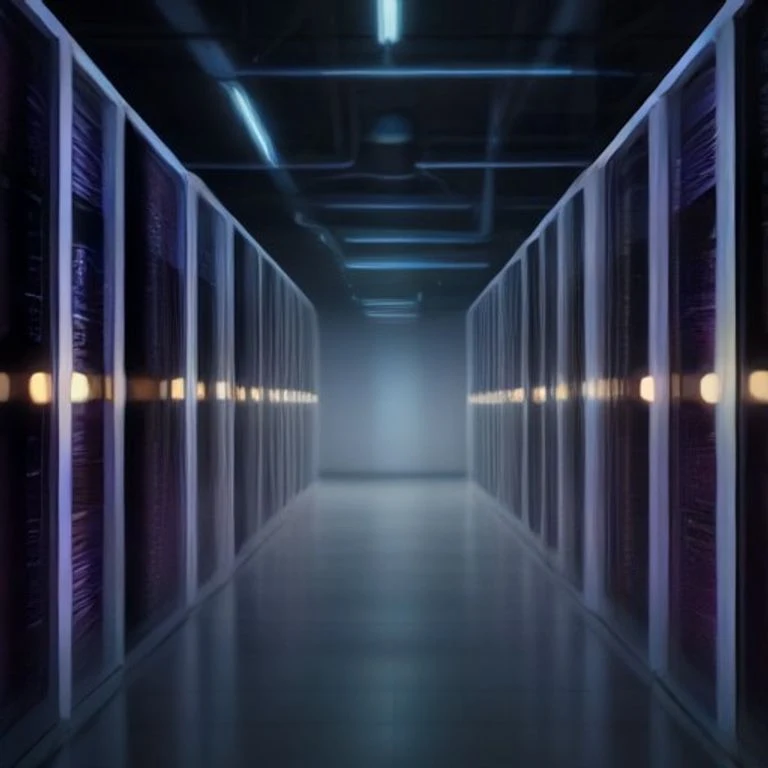
The artificial intelligence boom has officially fundamentally changed the global technology sector. From large language models that generate code in seconds to enterprise predictive analytics reshaping healthcare and finance, the digital frontier is expanding at a breakneck speed. However, behind every slick chat interface and intelligent automation tool lies a physical reality that the industry can no longer afford to ignore: real estate, metal, silicon, and an immense amount of electrical power.
For decades, data centers operated quietly in the background of the global economy. They consumed a steady, predictable amount of energy, gradually upgrading server racks as microprocessors became more efficient under Moore's Law. But generative AI has shattered that predictable equilibrium. The computational demands of training and running modern AI models have triggered an unprecedented surge in power consumption, pushing power grids to their structural limits and sending energy prices soaring.
Industry reports reveal that electricity consumption by data centers worldwide has jumped by nearly 17% in a single year, with projections indicating that power demand could double or even triple before the decade ends. We have entered an era where access to reliable, cheap, and clean electricity—not software engineering talent or capital—is becoming the primary bottleneck for technological innovation.
In this comprehensive guide, we will unpack the root causes of the AI energy crisis, analyze the infrastructure gridlock, and explore exact strategies for data center operators, enterprise tech leaders, and investors to navigate this transformation and emerge as winners in the AI boom.
The Anatomy of the AI Power Surge: Why AI is So Energy Hungry
To understand why data centers are suddenly facing an energy crunch, we must examine how artificial intelligence hardware differs from traditional web servers. For years, traditional cloud computing relied on Central Processing Units (CPUs) handling linear tasks. A standard server rack in a traditional cloud data center typically drew between 5 to 10 kilowatts (kW) of power.
AI compute demands are fundamentally different. Training massive foundational models like GPT-4, Claude, or Llama requires parallel processing across thousands of Graphics Processing Units (GPUs) or specialized Tensor Processing Units (TPUs). These chips run at maximum thermal capacity for weeks or months at a time without interruption.
Consider the shift in hardware density:
- Traditional Server Rack: 5 kW – 10 kW per rack
- High-Density Cloud Compute Rack: 15 kW – 25 kW per rack
- Modern AI / Accelerator Rack (e.g., NVIDIA H100/H200): 40 kW – 60 kW per rack
- Next-Generation Superchip Systems (e.g., NVIDIA Blackwell NVL72): 100 kW – 120+ kW per single rack
This ten-fold jump in power density has caught utility companies and facility planners flat-footed. A single modern AI data center campus can require up to 1 gigawatt (GW) of power capacity—roughly equivalent to the electricity output of a commercial nuclear reactor or the power needed to supply 750,000 homes.
Furthermore, the energy lifecycle of AI is divided into two phases, both of which strain infrastructure differently:
1. Model Training
Training requires thousands of clustered GPUs working simultaneously in a single hyper-connected physical location. Inter-chip latency must be virtually zero, meaning these workloads cannot be easily distributed across different cities. Training creates massive, sustained, continuous power spikes that run 24 hours a day, 7 days a week for months.
2. Model Inference
Inference occurs every time a user prompts an AI model to generate text, write code, or create an image. While a single search query on a standard engine consumes roughly 0.3 watt-hours of electricity, an AI-generated query can consume anywhere from 3 to 10 watt-hours—nearly ten to thirty times as much energy. As billions of daily searches migrate toward conversational AI, inference power requirements will vastly surpass training requirements.
The Grid Bottleneck: Why Power is the New Silicon
The tech industry's rapid appetite for power has collided head-on with the slow-moving world of utility infrastructure. Building a state-of-the-art data center building takes roughly 18 to 24 months. However, securing a connection to an electrical grid, upgrading local substations, and expanding high-voltage transmission lines often takes between 4 to 7 years in mature markets across North America and Europe.
This mismatch in timelines has created what industry insiders call the "interconnection queue backlog." Data centers are fully constructed, packed with millions of dollars in silicon hardware, yet sitting dark because local power utilities simply cannot deliver the required megawatt capacity.
Several underlying factors compound this grid crunch:
- Aging Power Infrastructure: Electrical grids in developed nations were designed in the mid-20th century for centralized fossil-fuel power plants and predictable industrial loads, not the localized, massive, constant loads required by hyper-scale AI campuses.
- Decarbonization Goals vs. Immediate Demand: Governments and corporations are striving to meet strict net-zero carbon goals. Coal power plants are retiring faster than utility-scale renewable energy and energy storage systems can replace them. When data centers demand instantaneous 24/7 power, intermittent renewables like solar and wind require backup storage solutions that are still scaling up.
- Supply Chain Delays for Electrical Hardware: It is not just about generating power; it is about moving it. Lead times for commercial high-voltage transformers, switchgear, and utility-scale circuit breakers have exploded from 30 weeks to over 3 to 4 years due to global supply chain bottlenecks.
Because of these headwinds, electricity availability has replaced chip supply as the single primary constraint on AI expansion. Those who secure reliable, scalable power will dominate the market; those who do not will watch their hardware depreciate in dark warehouses.
How to Win in the AI Boom: A 5-Pillar Strategic Blueprint
Overcoming the energy crisis requires a complete strategic overhaul for data center developers, enterprise technology executives, cloud architects, and tech investors. Winning in this space will not come from waiting for utilities to modernize their grids. It requires aggressive innovation at every layer of the technology stack—from thermodynamics and civil engineering to chip selection and software optimization.
Here is the 5-pillar strategic playbook to win the AI infrastructure era.
Pillar 1: Modernize Infrastructure with Advanced Liquid Cooling
Traditional data centers rely on massive industrial air conditioning systems to blow chilled air across server racks. When rack density was 5 kW to 10 kW, air cooling was simple and effective. However, at 40 kW to 120 kW per rack, air cooling hits a physical wall. Air simply cannot absorb and transport heat fast enough to prevent modern GPUs from thermal throttling or permanently failing.
In fact, in a traditional air-cooled facility, nearly 40% of the entire energy bill goes toward running fans and chillers rather than powering actual compute chips. To win in the AI era, facilities must transition rapidly to direct liquid cooling techniques:
- Direct-to-Chip (Cold Plate) Liquid Cooling: Liquid coolant (such as treated water or dielectric fluid) is piped directly through closed loop circuits attached to conductive cold plates mounted on top of the GPU and CPU chips. Liquid conducts heat away up to 3,000 times more efficiently than air, reducing cooling energy overhead by up to 80%.
- Single-Phase & Two-Phase Immersion Cooling: Servers are completely submerged in baths of specially engineered non-conductive dielectric fluid. As components heat up, the fluid removes thermal energy directly. Immersion cooling dramatically reduces thermal wear, eliminates structural fan noise, and allows racks to be placed in ultra-dense configurations.
By lowering a data center's Power Usage Effectiveness (PUE) rating from a traditional industry average of 1.5 down to 1.1 or lower through direct liquid cooling, operators free up roughly 30% of their total power capacity—allowing them to install significantly more AI hardware within their existing grid allocations.
Pillar 2: Hardware Diversification and Software Model Compression
Solving the power crunch is not purely an infrastructure job; it requires optimizing the software and hardware architecture. Running brute-force, unoptimized large language models on general-purpose GPUs is extremely wasteful from an energy standpoint.
Forward-thinking organizations are adopting clear strategies to maximize compute per watt:
- Deploying Domain-Specific ASICs: While general-purpose GPUs are brilliant for training flexible models, tailored Application-Specific Integrated Circuits (ASICs) or Neural Processing Units (NPUs) offer vastly superior energy efficiency for dedicated inference tasks. Custom silicon designed specifically for target mathematical operations can perform inference at a fraction of the wattage consumed by a top-tier GPU.
- Model Quantization and Pruning: AI engineers are using mathematical compression techniques to reduce the energy footprint of AI inference. Quantization reduces the precision of model weights (for example, moving from 16-bit floating-point numbers to 8-bit or 4-bit integers). This halves or quarters memory bandwidth requirements and reduces power consumption during inference by 50% to 70% with negligible loss in output accuracy.
- Small Language Models (SLMs) and Speculative Decoding: Not every corporate task requires a 700-billion-parameter model running on a power-hungry cluster. Implementing smaller, fine-tuned models trained for specific enterprise workflows yields faster response times and drastically lower energy bills. Additionally, using small models to rapidly generate speculative tokens while a larger model validates them saves significant computational cycles.
Pillar 3: The Clean Energy Shift—On-Site Generation & Microgrids
Relying exclusively on municipal electrical grids is no longer a viable plan for expanding AI operations. Leading hyper-scalers and forward-looking data center developers are taking matters into their own hands by becoming independent power producers or building strategic co-located generation facilities.
Key on-site and clean energy strategies include:
- The Nuclear Renaissance (SMRs & Legacy Re-commissioning): Nuclear energy offers the ultimate holy grail for AI data centers: zero-carbon emissions combined with continuous, high-density baseline reliability. Major tech giants are forging direct Power Purchase Agreements (PPAs) with legacy nuclear plants or funding Small Modular Reactors (SMRs). SMRs are factory-built, compact nuclear units that can be deployed adjacent to data center campuses, providing dedicated, off-grid power for decades.
- Geothermal Energy: Next-generation enhanced geothermal systems drill deep into the Earth's crust to harvest constant geothermal heat, converting it into reliable baseload electricity without weather-dependent fluctuations.
- Microgrids with Battery Energy Storage Systems (BESS): Integrating local utility-scale solar arrays with high-capacity battery storage and microgrid software enables data centers to smooth out peak demand spikes, perform load arbitrage (charging batteries when grid power is cheap and abundant, and discharging during peak rates), and protect operations against grid outages.
Pillar 4: Geographic Decentralization and Intelligent Workload Placement
Historically, data centers were built near major urban business hubs to minimize internet latency for end-users. However, AI training workloads are fundamentally latency-tolerant. A training job running in Northern Virginia does not execute any better or faster than one running in rural Norway, South Dakota, or Iceland—provided high-bandwidth fiber backhaul is present.
To bypass grid bottlenecks in crowded metropolitan areas, strategic operators are embracing geographic redistribution:
- Energy-First Site Selection: Instead of building facilities where digital demand resides and begging for power, developers are building data centers directly where abundant, stranded energy exists—such as near hydro-electric dams in Canada and the Nordics, or near massive wind farms in the Midwest United States.
- Temporal Workload Shifting: Modern cloud orchestrators can shift non-time-sensitive workloads dynamically across global data centers based on real-time power availability, local weather conditions, and green energy availability on local grids. Models are trained where clean energy is cheapest at any given hour of the day.
Pillar 5: Flexible Demand Response and Grid Participation
Rather than acting as passive consumers straining local grids, modern AI data centers can become active partners in energy stabilization. Utilities worldwide are offering lucrative incentives for facilities that participate in "Demand Response" programs.
Because AI workloads can be paused, throttled, or shifted faster than traditional industrial factories, smart data centers can temporarily lower their power consumption during regional grid emergencies or heatwaves. In return, utilities reward data center operators with significantly discounted energy rates, reduced capacity fees, and priority interconnection status.
Data Center Transformation: Traditional vs. AI-Era Facilities
To visually summarize how data center infrastructure is changing, the table below highlights the key differences between standard cloud facilities and modern AI-optimized data centers:
| Infrastructure Metric | Traditional Cloud Data Center | AI-Optimized Data Center |
|---|---|---|
| Power Density per Rack | 5 kW – 15 kW | 40 kW – 120+ kW |
| Primary Cooling Method | Raised-floor chilled air cooling | Direct-to-Chip Liquid / Immersion Cooling |
| Primary Compute Hardware | Standard x86 / ARM CPUs | Accelerated Parallel GPUs, TPUs, & Custom ASICs |
| Site Selection Priority | Proximity to end-users / Low fiber latency | Proximity to cheap, abundant, zero-carbon power |
| Average Power Usage Effectiveness (PUE) | 1.4 – 1.6 | 1.05 – 1.15 |
| Energy Sourcing Model | 100% passive grid reliance | Hybrid Grid + On-site Microgrids, SMRs, & PPAs |
Where Capital is Flowing: Strategic Opportunities for Investors
The energy crunch facing AI is not just an engineering problem; it represents one of the largest capital investment cycles in modern history. Hundreds of billions of dollars will flow into infrastructure, hardware, and clean tech startups over the next decade.
Investors and corporate strategists looking to capitalize on this tectonic shift should pay close attention to four emerging categories:
1. Liquid Cooling Equipment Manufacturers
As rack power densities exceed 40 kW, retrofitting air-cooled centers and constructing new liquid-cooled facilities is non-negotiable. Companies producing industrial cold plates, coolant distribution units (CDUs), immersion tanks, and specialized dielectric fluids are experiencing explosive order growth.
2. Modern Grid and Transformer Supply Chains
High-voltage equipment manufacturing, grid automation software, solid-state transformers, and advanced transmission line materials are essential components required to modernize power delivery networks worldwide.
3. Advanced Energy Storage and Generation Startups
Capital is aggressively backing companies commercializing Small Modular Reactors (SMRs), next-generation geothermal drilling technology, long-duration iron-air battery systems, and hydrogen fuel cells capable of offering reliable off-grid baseload power.
4. Efficiency Software and AI Infrastructure Management
Software platforms that leverage predictive AI algorithms to monitor server thermal profiles, optimize real-time energy draw, dynamic workload routing, and automate demand-response interaction with local utility operators are seeing rapid enterprise adoption.
Actionable Steps for Enterprise Leaders Today
If you are a Chief Technology Officer, Chief Information Officer, or IT leader planning your company's long-term artificial intelligence roadmap, you cannot rely entirely on third-party cloud vendors to absorb these cost increases indefinitely. Power constraints will ultimately translate into higher cloud compute prices and API usage tiers.
Here are four immediate actions to insulate your organization and maintain a competitive edge:
- Audit Your Current AI Compute Efficiency: Analyze your software architecture. Identify where expensive, power-hungry foundational models are being over-utilized for simple administrative tasks that could be handled easily by compressed, fine-tuned 7B or 8B parameter models.
- Inquire About Cloud Provider Sustainability & Power Guarantees: Evaluate your primary cloud providers (AWS, Azure, Google Cloud, specialized GPU clouds) on their geographic expansions, rack density caps, and long-term clean energy procurement strategies. Ensure their infrastructure bottlenecks do not disrupt your core enterprise applications.
- Factor Energy Costs Into ROI Calculations: When evaluating new internal AI initiatives, calculate operational costs based on expected energy consumption rather than just initial hardware software licenses. Energy is now a primary variable cost in software operations.
- Explore Hybrid and Edge Computing Deployments: For inference tasks, evaluate moving computation out of giant, centralized hyper-scale facilities and shifting it toward local edge infrastructure or localized enterprise data centers equipped with targeted liquid cooling racks.
Conclusion: Power as the Strategic Asset of the AI Era
The artificial intelligence revolution is fundamentally an energy technology story. The digital transformation of every global industry—from finance and healthcare to entertainment and manufacturing—is bound by the physical realities of physics, thermodynamics, and power generation capacity.
The winners of the AI boom will not necessarily be the companies with the most parameters in their software models or the sleekest user interfaces. The true winners will be the innovators, operators, and forward-thinking technology leaders who master the physical infrastructure layer. By embracing direct-to-chip liquid cooling, diversifying compute hardware, investing in clean baseline power generation, and optimizing software models for energy per watt, organizations can successfully bypass grid gridlock and power the future of human intelligence.
The age of effortless, infinite compute power is over. The era of smart, sustainable, energy-efficient AI infrastructure has begun—and those who act today will lead the technology landscape for decades to come.



0 Comments