
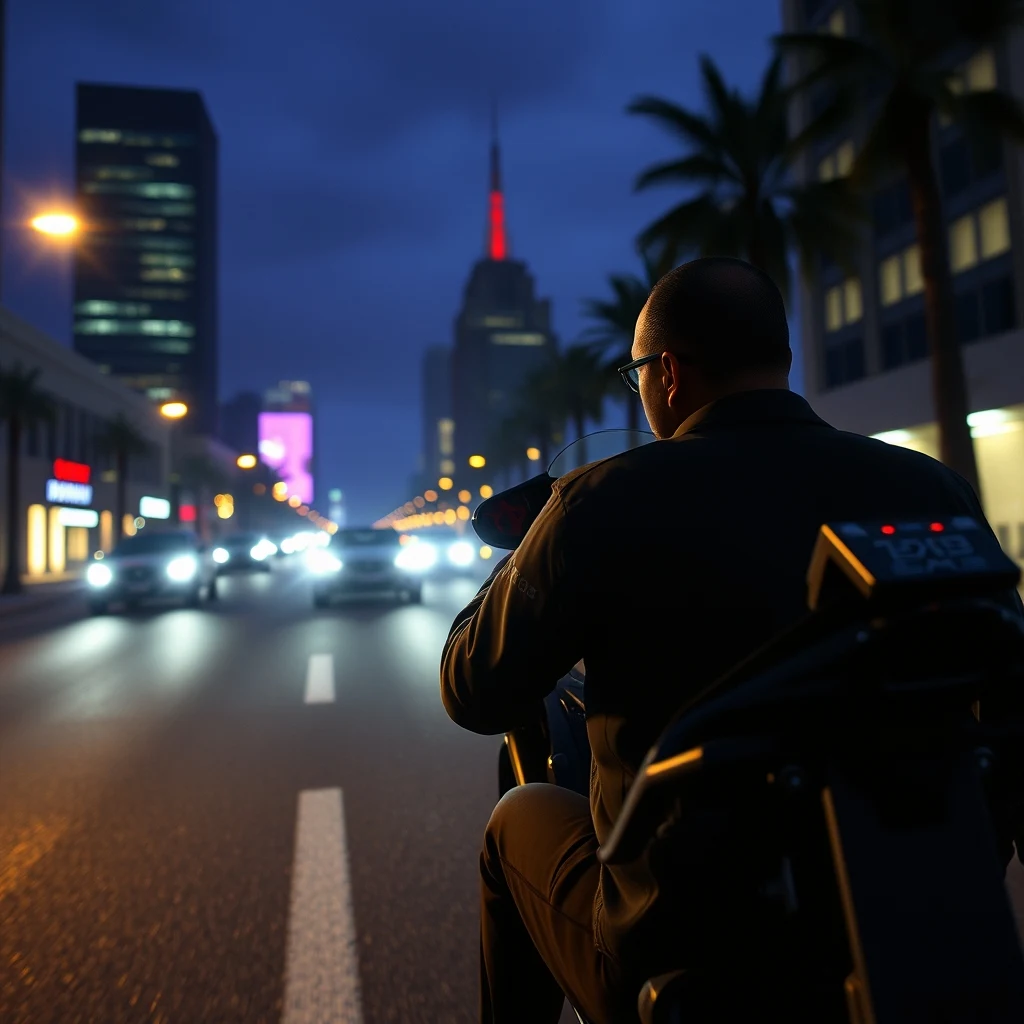
GTA 6 Sounds Like It Won't Be 60FPS At Launch - What Gamers Need to Know
Welcome back to TechRook, your ultimate destination for the latest technology and gaming insights. If you are part of the global gaming community, you are likely counting down the days until the release of Grand Theft Auto 6. Rockstar Games has set the bar impossibly high with every single entry in this legendary franchise. Naturally, the hype surrounding the next installment is reaching a fever pitch. Every new trailer, rumor, and leak is analyzed down to the single frame by millions of eager fans.
Recently, a wave of discussion has flooded the gaming world following reports and industry analysis suggesting that GTA 6 might not hit the coveted 60 frames per second (FPS) mark at launch, particularly on current-generation consoles. For hardcore performance enthusiasts, this news has sparked intense debate. Is it true? Why would a multi-billion-dollar game release without 60FPS support? And most importantly, does it actually matter for the average player?
In this comprehensive article, we will break down the rumors, analyze the technical capabilities of modern hardware, explore Rockstar Games' historical development philosophy, and help you understand what to expect when you finally boot up the game on launch day.
The Rumor Mill: Why Are People Talking About 30FPS?
The discussion surrounding the frame rate of GTA 6 gained serious momentum following industry insights and technical breakdowns shared across major gaming platforms, including recent reports highlighted by outlets like Kotaku. As developers push the boundaries of what video games can visually achieve, hardware limitations come back into sharp focus.
When Rockstar Games released the first official trailer for Grand Theft Auto 6, the internet stopped. The density of the crowds, the lighting, the water physics, the vehicle deformation, and the sheer scale of Vice City left everyone breathless. However, tech-savvy gamers immediately began asking the critical question: Can current hardware actually run this at 60 frames per second?
Industry experts and hardware analysts point to the immense processing power required to render a fully simulated open world of that magnitude. While the PlayStation 5 and Xbox Series X are powerful machines, they are operating under strict hardware thresholds. To achieve the hyper-realistic visuals, complex physics, and massive non-player character (NPC) densities that Rockstar is known for, developers often have to make difficult compromises. Frequently, frame rate is the first sacrifice made in favor of graphical fidelity and world complexity.
Understanding Frame Rates: 30FPS vs. 60FPS in Open-World Games
Before we dive deeper into the technicalities, let us clarify what the difference between 30FPS and 60FPS actually means for your gaming experience.
Frame rate refers to the number of individual images or frames that your console or PC displays on your screen every second.
- 30FPS: This has been the standard baseline for cinematic, story-driven console games for generations. It offers a smooth, movie-like quality, but fast camera movements can sometimes feel slightly blurry or sluggish.
- 60FPS: This provides double the visual information every second. Gameplay feels remarkably responsive, fluid, and crisp. It is especially favored in fast-paced shooters, racing games, and competitive multiplayer titles.
When it comes to open-world sandbox games, the challenge multiplies exponentially. In a linear shooter, the game engine only needs to render what is directly in front of the player. In an open world like Vice City, the game must simultaneously track thousands of variables: AI behavior, traffic patterns, dynamic weather systems, physics interactions, and background rendering. Balancing all of that while maintaining a locked 60FPS is an engineering marvel that very few developers achieve without massive optimization tricks.
The Technical Burden of Rockstar’s Ambition
Rockstar Games has never been a developer that cuts corners. With every new title, they aim to redefine the medium. Let us look back at how previous releases handled hardware limitations:
| Game | Original Release Platform | Launch Frame Rate |
|---|---|---|
| Grand Theft Auto V | PlayStation 3 / Xbox 360 | Locked 30FPS |
| Red Dead Redemption 2 | PlayStation 4 / Xbox One | Locked 30FPS |
| Grand Theft Auto VI | PlayStation 5 / Xbox Series X|S | Expected 30FPS (Performance Mode TBD) |
As history shows, Rockstar traditionally targets the absolute visual ceiling of the current console generation at launch. Red Dead Redemption 2 pushed the PlayStation 4 and Xbox One to their absolute limits, delivering one of the most visually stunning worlds ever created, locked firmly at 30 frames per second. It was only years later, through hardware upgrades and dedicated patches, that enhanced frame rates became the industry standard.
If GTA 6 follows this exact historical blueprint, launching at a stable 30FPS allows Rockstar to maximize ray tracing, complex lighting models, ultra-high-resolution textures, and dense pedestrian simulations without worrying about severe frame drops during intense action sequences.
How Will the Console Hardware Handle GTA 6?
Let us take a closer look at the primary platforms where GTA 6 will launch:
PlayStation 5 and Xbox Series X
Sony and Microsoft’s flagship consoles are technological powerhouses compared to the previous generation. However, running a next-generation open world with unprecedented fidelity presents a massive bottleneck. While these consoles are fully capable of 60FPS in many optimized titles, the sheer CPU and GPU load of a game like GTA 6 makes a native 60FPS mode exceptionally difficult to achieve without drastically scaling down resolution, draw distances, or crowd density.
Xbox Series S
The conversation around the Xbox Series S continues to be a hot topic in the development community. Because Microsoft requires feature parity across both Xbox Series X and Series S, developers must optimize their games to run on the less powerful Series S hardware. This requirement has led some industry insiders to speculate that optimization hurdles on the Series S could heavily influence the technical compromises made across all console versions.
The Pro Console Factor
With the introduction of mid-generation refreshes like the PlayStation 5 Pro, many gamers wonder if a mid-gen console will be the key to unlocking 60FPS. While a more powerful GPU and advanced AI-driven upscaling (like PlayStation Spectral Super Resolution) will undoubtedly offer superior visual clarity and higher performance ceilings, developers must still build the core game to run smoothly on the baseline hardware that millions of players already own.
Why Gamers Should Not Panic
Hearing that a heavily anticipated game might not run at 60FPS can feel disappointing at first glance. However, there is plenty of reason for optimism. Here is why a 30FPS launch for GTA 6 is not the disaster some online commentators claim it to be:
- Rockstar’s Polishing Standards: Rockstar is famous for its meticulous approach to frame pacing and motion blur. A well-optimized 30FPS game with proper motion blur implemented can feel remarkably smooth and natural to the human eye.
- Visual Immersion Over Speed: In a game focused on exploration, storytelling, driving, and environmental interaction, visual fidelity and world immersion often outweigh raw frame rate. Walking through a bustling, hyper-detailed Vice City feels more impactful when every neon sign and wet street reflection looks photorealistic.
- Future Upgrades Are Inevitable: Just like GTA V transitioned across three console generations, receiving multiple performance boosts, GTA 6 will undoubtedly see enhanced versions, PC ports, and optimization patches as hardware evolves.
What Developers and Insiders Are Saying
Industry veterans who have worked on massive open-world titles frequently emphasize the heavy toll that CPU calculations take in modern game engines. Graphics cards handle lighting and textures, but the central processing unit handles the brain of the game—physics, AI paths, scripting, and traffic simulation.
Because the AI simulation planned for GTA 6 is rumored to be lightyears ahead of anything seen in GTA V, the CPU load will be immense. Developers must choose between simplifying the AI to achieve 60FPS or keeping the world fully alive and breathing at 30FPS. For a franchise built on immersion, sacrificing the simulation depth is rarely an option Rockstar is willing to take.
The PC Gaming Perspective
While console players face launch limitations, PC gamers are looking at a different horizon entirely—though with a familiar sense of patience. Historically, Rockstar Games staggers its releases, launching on consoles first and bringing the title to PC at a later date.
When GTA 6 eventually arrives on PC, frame rate caps will largely become a thing of the past for players with high-end rigs. Armed with powerful graphics cards, custom cooling systems, and powerful desktop processors, PC enthusiasts will likely be able to unlock high frame rates, custom graphic presets, and incredible resolutions. However, PC players will also face the inevitable challenge of high system requirements and optimization tuning upon release.
Comparing Next-Gen Open Worlds
To put things into perspective, let us look at how other recent open-world blockbusters handled the 30FPS vs. 60FPS dilemma at launch:
- Cyberpunk 2077 (2020): Launched with severe technical hurdles, but eventually introduced performance modes prioritizing 60FPS after extensive patches and hardware optimization.
- Dragon's Dogma 2 (2024): Launched with an uncapped frame rate targeting around 30 to 40 FPS on consoles, sparking intense discussions about CPU bottlenecks in modern open-world design.
- The Legend of Zelda: Tears of the Kingdom (2023): Prioritized consistent world simulation and gameplay mechanics over high frame rates, delivering a masterpiece despite hardware limitations.
These examples highlight a universal truth in modern game development: grand scale and high frame rates are locked in a constant tug-of-war. Developers must make calculated artistic and technical choices to deliver the best possible overall experience.
Looking Ahead: The Road to Release
As we get closer to the official release window of Grand Theft Auto 6, Rockstar Games will undoubtedly release more technical deep dives, gameplay trailers, and performance breakdowns. Until then, take rumors regarding frame rates with a healthy dose of perspective.
Whether the game launches at a rock-solid 30FPS with jaw-dropping next-gen visuals, or surprises us with a performance mode option, one thing remains certain: GTA 6 is poised to be a monumental cultural and technological milestone in video game history. Rockstar has never failed to deliver an unforgettable experience, and the wait will undoubtedly be worth every single second.
Final Thoughts from TechRook
Technology moves fast, but the ambition of game developers moves even faster. While 60FPS has become the gold standard for many genres, open-world masterpieces like GTA 6 operate in a league of their own. Pushing hardware to its absolute limit is part of what makes these launches so exciting.
What are your thoughts on the frame rate debate? Does launching at 30FPS dampen your excitement, or are you ready to explore Vice City no matter what? Let us know your thoughts, and stay tuned to TechRook for more breaking gaming news, hardware guides, and tech insights!



0 Comments