
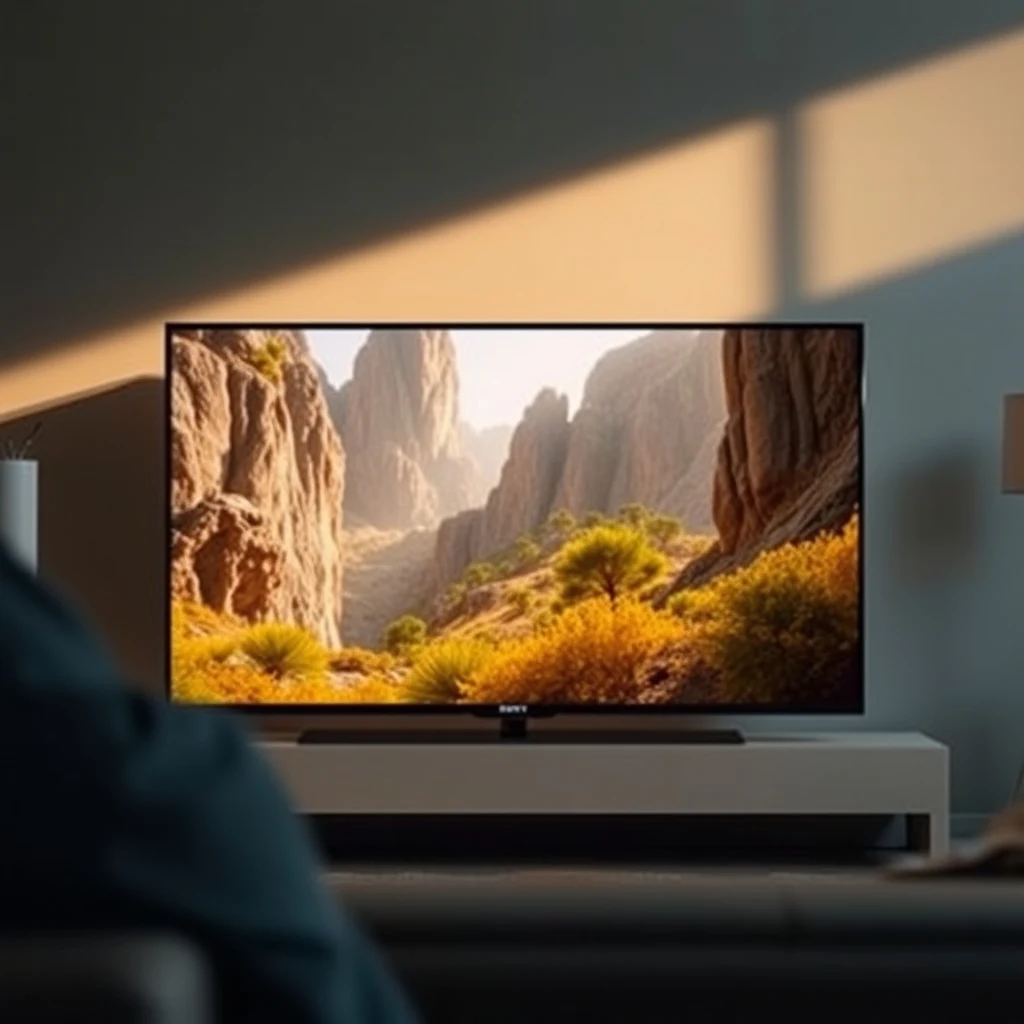
Sony’s Flagship Bravia 9: How a Revolutionary Mini LED Tech Challenges OLED’s Crown
For nearly a decade, a single, undisputed truth has governed the premium television market: if you want the absolute best picture quality, you buy an OLED. Tech enthusiasts, cinematic purists, and casual viewers alike have long praised organic light-emitting diode technology for its perfect, self-lit black levels, near-infinite contrast, and lack of distracting backlight halos. OLED was the gold standard, while LED-backlit LCD televisions, even those utilizing sophisticated Mini LED arrays, were relegated to bright-room alternatives. They were bright, yes, but they simply could not match the pixel-level precision and emotional depth of an OLED display.
Then, Sony decided to rewrite the rulebook.
With the release of its flagship television, the Bravia 9, Sony has done something that shocked the home theater world. Instead of placing a QD-OLED (Quantum Dot OLED) at the absolute pinnacle of its product lineup, the Japanese tech giant crowned a Mini LED TV as its ultimate flagship display. This is not just a minor hardware update; it represents a fundamental paradigm shift in display engineering. Driven by a revolutionary, microscopic LED controller that Sony claims is the smallest in the world, the Bravia 9 promises to deliver the blinding brightness of LED alongside the ink-like black levels and ultra-precise contrast control of OLED.
At TechRook, we pride ourselves on looking past the marketing buzzwords to see how these devices perform in real-world living rooms. Is Sony’s new backlight technology truly a breakthrough, or is it just another highly polished iteration of a legacy display type? Let us dive deep into the engineering marvels, structural designs, and real-world performance metrics of the incredible Sony Bravia 9.
The Mastering Monitor Connection: Why Sony Shifted Focus
To truly understand why Sony made this unexpected pivot toward Mini LED, we have to look behind the closed doors of Hollywood post-production studios. Sony is unique in the entertainment industry because it does not just build consumer televisions; it builds the entire production pipeline. From the professional cameras used by directors on set to the mastering monitors used by colorists to grade blockbuster films, Sony's hardware touches every step of a movie’s creation.
Recently, Sony introduced its next-generation professional master monitor, the BVM-HX3110. This dual-cell LCD monitor is capable of reaching an astonishing 4,000 nits of peak brightness. Crucially, the creative minds in Hollywood are increasingly mastering films at brightness levels far higher than the 1,000-nit standard of previous years. They want skies to look blindingly real, explosions to pop with terrifying luminance, and specular highlights to shimmer naturally.
While consumer OLED televisions have made incredible strides in brightness over the last two years, they still face physical limitations. To prevent permanent burn-in and manage heat, OLEDs rely on Aggressive Automatic Brightness Limiters (ABL). When a large portion of an OLED screen becomes bright, the TV automatically dims the image to protect its organic components. Additionally, OLEDs struggle to maintain high color volume at extreme brightness levels.
Sony realized that to display these modern, high-luminance master tracks exactly as the directors intended, consumer televisions needed to reach sustained brightness levels that OLED simply could not safely provide. The goal for the Bravia 9 was clear: translate the unmatched, high-nit mastering capabilities of the professional BVM-HX3110 monitor into a consumer-friendly television that fits beautifully in a modern living room.
The Engineering Marvel: Inside the Microscopic 22-Bit LED Driver
Traditional Mini LED televisions boast thousands of tiny light-emitting diodes packed tightly behind an LCD panel. However, the limitation of Mini LED technology has never been the size of the LEDs themselves; it has been the hardware driving them. Standard LED TVs control their backlights in large clusters or "zones." When a bright object, like a white subtitle or a distant star, appears against a dark background, the TV has to illuminate an entire zone. This causes a distracting glowing haze known as "blooming" or "halo effect."
Sony’s breakthrough with the Bravia 9 lies in its revolutionary XR Backlight Master Drive, powered by an entirely new, proprietary LED driver chip. To call this chip small is an understatement; it is smaller than a single grain of sesame seed. Despite its microscopic footprint, this driver possesses incredible computing power.
- Unprecedented Grayscale Depth: The Bravia 9 operates with a 22-bit LED control system. While standard televisions process backlight luminance at much lower bit depths, Sony's 22-bit system allows for incredibly fine increments of brightness control. This means the transition from pure black to dark gray, and finally to bright white, is handled with ultra-smooth gradations, completely eliminating blocky digital artifacts in dark scenes.
- Individual Element Control: Instead of grouping massive blocks of LEDs together under a single control command, Sony's new driver chip controls much smaller, high-density groupings of Mini LEDs. This yields a massive increase in local dimming zones without requiring a bulky, power-hungry chassis.
- High Energy Efficiency: Typically, pushing a display to extreme brightness levels requires a massive amount of electrical power. Sony's new driver chip manages electrical current with surgical precision, directing power only to the exact pixels that need it. This results in a TV that is significantly brighter than its predecessors while actually consuming less power overall.
By pairing this microscopic driver with its industry-leading cognitive processing, Sony has created a display that does not just blast light at the viewer, but shapes it with breathtaking artistry.
Comparing the Specs: Bravia 9 vs. Traditional Technologies
To help visualize how the Bravia 9 fits into the current television landscape, let us look at how its core specifications compare against standard Mini LED displays and flagship QD-OLED models.
| Feature / Parameter | Standard Mini LED TVs | Flagship QD-OLED TVs | Sony Bravia 9 (Flagship Mini LED) |
|---|---|---|---|
| Peak Brightness (Specular) | 1,500 - 2,500 Nits | 1,500 - 2,000 Nits (Small Windows) | Approx. 3,000 - 4,000 Nits |
| Sustained Full-Screen Brightness | 600 - 800 Nits | 250 - 300 Nits (Heavy ABL Intervention) | Over 900+ Nits |
| Black Levels | Good (Slight Blooming) | Infinite (True Black) | Near-Infinite (Virtually No Blooming) |
| Color Volume at High Brightness | Moderate (Can Look Washed Out) | Excellent (Rich, Pure Colors) | Outstanding (Rich and Highly Saturated) |
| Panel Lifespan / Burn-in Risk | Zero Risk | Low-to-Moderate (In Extreme Scenarios) | Zero Risk |
| Backlight Precision | Standard Multi-Zone Controller | Pixel-Level Control | Proprietary 22-bit Micro-Driver Control |
The Visual Experience: Blooming is Dead, Long Live the Highlights
So, how do all these microscopic components and high-bit processing systems translate to the screen? In a word: spectacular.
If you watch a dark, atmospheric sci-fi movie like Blade Runner 2049 or Dune on a typical Mini LED screen, you are bound to notice moments of visual compromise. Perhaps a bright holographic advertisement illuminated a chunk of the dark sky behind it, or a flashlight cut a wide, blurry path through a dark corridor. This is blooming, and it immediately pulls you out of the cinematic experience.
On the Sony Bravia 9, blooming is virtually imperceptible. Sony's local dimming algorithm is so sophisticated that it knows exactly when to suppress light around thin objects like white text on a black screen. It maintains deep, rich, inky blacks that will make you double-check if you are actually watching an OLED TV. When a sudden burst of bright light occurs—such as a lightsaber ignition or a sunrise over an ocean—the transition is instantaneous and jaw-dropping. The specular highlights possess a physical, tactile quality that makes images look astonishingly three-dimensional.
A Revolution in Color Volume
One of the hidden strengths of the Bravia 9's high-luminance capability is its color volume. In display technology, color volume refers to a TV’s ability to display rich, saturated colors at different levels of brightness. Standard TVs often look vibrant in dim scenes, but when they attempt to display a bright, sunlit field of flowers, the colors can look pale and washed out because the backlight washes over the color filter.
Thanks to the fusion of Quantum Dot technology and Sony’s micro-driver lighting, the Bravia 9 maintains intense, beautifully saturated primary colors even at peak brightness levels. A bright yellow flame or a deep neon-blue laser looks incredibly rich and vibrant, adding a level of realism to HDR content that has to be seen to be believed.
The Brains Behind the Beauty: XR Processor
No matter how advanced a television's physical panel is, the final picture is only as good as the processing engine driving it. Sony has long been heralded as the undisputed king of TV processing, and the XR Processor found inside the Bravia 9 continues this legacy of excellence.
Rather than simply applying blanket enhancements to the entire screen, the XR Processor works by mimicking the human brain. When we look at the world around us, our eyes automatically focus on specific focal points—a main character's face, a moving car, or a brightly lit sign. Sony’s processor analyzes the incoming video signal in real-time, dividing the screen into hundreds of zones and identifying where the viewer's eye is naturally drawn.
Once it identifies these focal points, it enhances the depth, texture, and sharpness of those specific areas, making the overall scene feel incredibly lifelike. Additionally, the processor features state-of-the-art upscaling technologies:
- XR Clear Image: This technology analyzes low-resolution or heavily compressed content—such as streaming shows or older cable broadcasts—and intelligently removes digital noise, compression artifacts, and motion blur. The result is clean, clear, and near-4K quality video regardless of the source.
- XR Motion Clarifier: Fast-paced action films and live sports can sometimes suffer from stuttering or motion blur on high-brightness panels. Sony's processor analyzes individual pixels across successive frames to insert black frames precisely and smoothly, preserving high brightness while maintaining razor-sharp clarity.
Addressing the Viewing Angle and Reflection Dilemma
Historically, two of the biggest pain points for premium LCD-based televisions have been limited viewing angles and screen reflections. If you sit directly in front of a standard LCD TV, the picture looks great. But if you move to a side chair or a corner sofa, the colors quickly fade, and the contrast washes out. Furthermore, if you have large windows in your living room, bright afternoon sunlight can turn your premium display into a giant mirror.
Sony tackled both of these issues head-on in the Bravia 9 with two proprietary optical films: X-Wide Angle and X-Anti Reflection.
The X-Wide Angle optical layer sits directly on top of the LCD panel, bending the backlight's path to ensure that colors and contrast remain remarkably stable and saturated, even when viewing the television from extreme off-axis angles. While it may not completely match the flawless viewing angles of an OLED panel, it comes closer than almost any other LCD screen on the market, making it an excellent choice for large family rooms or hosting game-day gatherings.
Simultaneously, the X-Anti Reflection coating acts as a shield against ambient light. Instead of reflecting room lights or sunlit windows directly back at your eyes in sharp, distracting glares, the coating diffuses the reflected light across the panel, rendering it nearly invisible when the television is powered on. This allows the Bravia 9 to perform beautifully in bright, sun-drenched living spaces where traditional OLED TVs would struggle to remain visible.
Acoustic Multi-Audio+: Sound That Flows from the Screen
Most modern, ultra-thin televisions suffer from a common flaw: awful built-in sound. Because TVs have become so thin, manufacturers simply do not have the physical cabinet space to mount high-quality, forward-firing speakers. As a result, many premium TVs rely on small, down-firing speakers that sound thin, tinny, and completely detached from the action on the screen.
Sony took a radically different approach with the Bravia 9, employing its advanced Acoustic Multi-Audio+ technology. Rather than relying solely on speakers mounted at the bottom of the frame, Sony integrated sophisticated actuators and specialized beam tweeters directly into the sides and top frame of the television.
This creates a stunning physical soundstage where audio is precisely localized to the action on screen. If a helicopter flies from the left side of the frame to the right, you will physically hear the chopping sound travel across the width of the display. If a character speaks on the upper portion of the screen, their voice sounds like it is emanating directly from their mouth, rather than from beneath the TV stand.
Additionally, the Bravia 9 acts as the perfect anchor for a wider home audio setup through Acoustic Center Sync. When paired with compatible Sony soundbars or home theater systems (such as the new Bravia Theater Bar 9 or Bravia Theater Quad), the television's built-in sound system integrates seamlessly with the external speakers, functioning as the dedicated center channel for crystal-clear dialog delivery.
Designed for Gamers and Cinephiles Alike
Whether you are a casual viewer, a dedicated cinema purist, or a competitive gamer, the Sony Bravia 9 has been meticulously designed to accommodate your specific entertainment needs.
The ultimate Cinematic Experience
For movie lovers, the Bravia 9 features an array of specialized viewing modes that bypass aggressive digital processing to preserve the original creative intent of the content creator. These modes include:
- Netflix Adaptive Calibrated Mode: This feature works in tandem with the TV's ambient light sensor to adjust color, contrast, and brightness automatically based on the lighting conditions in your room, ensuring that Netflix movies look exactly as they did in the studio editing bay.
- Prime Video Calibrated Mode: Developed in close collaboration with Amazon MGM Studios, this mode optimizes picture settings for prime original series and films, delivering cinematic precision straight to your living room.
- IMAX Enhanced and Dolby Vision: Full compatibility with premium HDR formats guarantees that you are getting the absolute maximum dynamic range and color accuracy out of physical media and high-end streaming platforms.
Next-Gen Gaming Capabilities
Gaming on the Bravia 9 is an absolute joy. Equipped with modern HDMI 2.1 inputs, the TV fully supports 4K gaming at 120Hz, Variable Refresh Rate (VRR), and Auto Low Latency Mode (ALLM). This ensures ultra-smooth gameplay, instantaneous inputs, and a complete absence of screen tearing or stuttering during fast-paced competitive matches.
Furthermore, when connected to a PlayStation 5 console, the Bravia 9 unlocks exclusive integrations. Auto HDR Tone Mapping instantly optimizes the console's HDR settings during initial setup to maximize detail in bright highlights and dark shadows, while Auto Genre Picture Mode automatically switches the TV into its low-latency game mode when you boot up a game, and then shifts back to standard cinematic mode when you watch a movie or stream content.
Is the Sony Bravia 9 Right for Your Home?
With its high price tag and ultra-premium feature set, the Bravia 9 is undoubtedly a significant investment. To help you decide if this display is the perfect centerpiece for your entertainment space, let us break down who this TV is best suited for, and who might want to look elsewhere.
Who It Is For:
- Bright-Room Owners: If your living space is filled with windows, natural sunlight, or bright overhead lighting, the Bravia 9's unmatched peak brightness and superb anti-reflective coating make it the absolute best premium TV on the market.
- Movie and Home Theater Enthusiasts: If you appreciate the microscopic details in dark scenes, high-impact HDR highlights, and the director's original vision, the 22-bit backlight system and Hollywood-mastered presets will blow you away.
- Those Worried About Burn-in: If you like to leave news channels running all day with static banners, or if you log hundreds of hours in games with bright static user interfaces, you can enjoy flagship-level picture quality with absolutely zero anxiety about OLED burn-in.
Who It Might Not Be For:
- Absolute Dark-Room Purists: If you only watch television in a pitch-black, dedicated home theater room and prefer the perfect, pixel-by-pixel self-lit control that only an OLED can provide, Sony’s own A95L QD-OLED remains a stunning alternative.
- Budget-Conscious Shoppers: The cutting-edge engineering and microscopic driver technology in the Bravia 9 come with a steep premium. If you are looking for pure performance-to-price ratio, there are many mid-tier Mini LED televisions that offer highly respectable performance at a fraction of the cost.
Conclusion: A New Era of Display Excellence
With the Bravia 9, Sony has achieved something truly remarkable. They did not just build another bright LED TV; they created a display that honors the hard work of Hollywood's best cinematographers and colorists by replicating professional mastering tools in a gorgeous, consumer-friendly package.
By shrinking the LED driver to a microscopic scale and mastering 22-bit light control, Sony has successfully bridged the gap between the blinding brightness of LED and the deep contrast of OLED. The results speak for themselves: stunningly vibrant colors, rich and detailed shadow gradations, near-complete elimination of blooming, and a sensory-rich cinematic presentation that breathes new life into your favorite films and video games.
The Bravia 9 is more than just an incredible flagship TV—it is a bold declaration that Mini LED technology is far from dead. In fact, under Sony's master craftsmanship, it is thriving, pushing boundaries, and confidently stepping up to claim the throne of ultimate home theater display.



0 Comments