
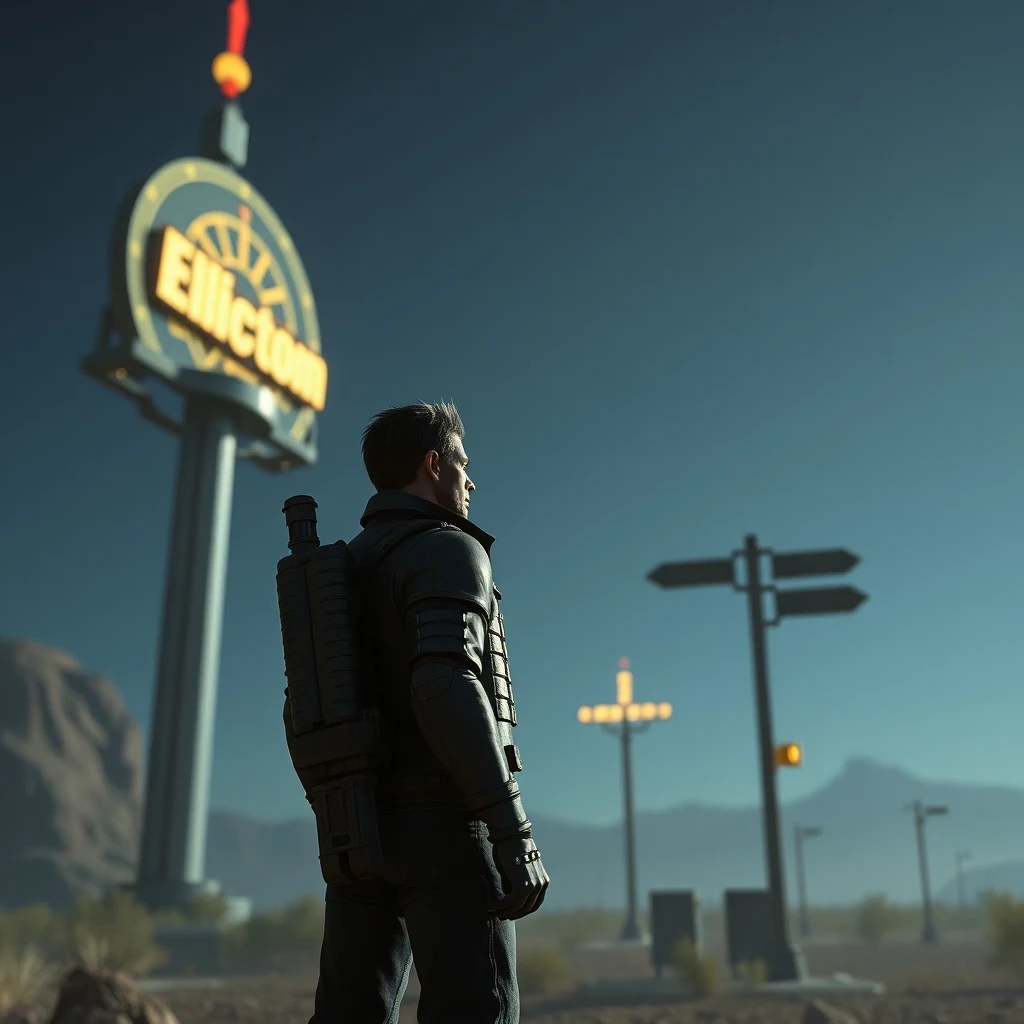
For decades, the standard pitch for role-playing games has centered on an alluring promise: total freedom. Marketing campaigns continuously assure players that they can go anywhere, do anything, and become anyone. Game studios compete to build larger maps, more expansive dialogue trees, and sandboxes so unrestricted that players can theoretically rewrite the entire game world to suit their personal whims. However, according to Josh Sawyer, the veteran director behind iconic games like Fallout: New Vegas, Pillars of Eternity, and Pentiment, this pursuit of unrestricted player control might actually be destroying the soul of the RPG genre.
During a recent industry discussion, Sawyer shared a fundamental truth about game design that challenges the current AAA design ethos: role-playing games cannot and should not let players control everything. While giving players total autonomy might sound great in a promotional trailer, removing boundaries, constraints, and meaningful friction ultimately degrades narrative stakes, weakens character progression, and cheapens the consequences that make RPGs so memorable in the first place.
At TechRook, we dive deep into the philosophy behind game development. In this comprehensive feature, we examine Josh Sawyer’s provocative arguments, explore the delicate balance between agency and structure, and analyze why the greatest RPGs in history are built on firm guardrails rather than total lawlessness.
The Paradox of Absolute Player Freedom
To understand why complete player control breaks a game, we must first look at how human choices acquire value. In real life, choices matter because resources are limited, time is finite, and actions carry unavoidable consequences. When an individual chooses one path, they inherently sacrifice another. Role-playing games operate on the exact same psychological dynamic.
When an RPG grants players complete power over every outcome, the weight of their choices disappears. If a game allows a player to master every skill, join every competing faction simultaneously, keep every companion happy, and solve every quest with a perfectly happy ending, those decisions cease to be meaningful. The world becomes a passive playground designed to flatter the player rather than a dynamic, living ecosystem with its own rules, biases, and structural realities.
Sawyer points out that true roleplaying does not mean acting as a god who shapes reality at will. Instead, true roleplaying happens when a player operates within the defined strengths, weaknesses, and ideological limits of a specific character inhabiting a believable world. When a developer removes all friction to keep the player from feeling disappointed, they inadvertently eliminate the emotional high points that come from overcoming genuine hardship.
Who Is Josh Sawyer and Why His Voice Matters
Josh Sawyer is not an armchair critic offering hot takes from the sidelines; he is one of the most respected design directors in video game history. During his long tenure at Black Isle Studios and Obsidian Entertainment, Sawyer has helped shape the narrative and mechanics of modern computer RPGs. His work on Fallout: New Vegas remains legendary within the gaming community, frequently cited as the gold standard for branching narratives, faction dynamics, and worldbuilding in modern action-RPGs.
What makes Sawyer’s perspective so influential is his deep commitment to systems design and structural integrity. Whether designing hardcore tabletop systems or complex digital RPGs, he understands that game design is fundamentally the art of creating interesting constraints. In Fallout: New Vegas, players were thrown into the harsh Mojave Wasteland, where every action carried systemic fallout. You could not appease both the New California Republic and Caesar's Legion forever. At some point, choosing a side meant shutting down other narrative avenues completely.
Sawyer’s recent projects, including the critically acclaimed historical mystery Pentiment, double down on this philosophy. In Pentiment, players must solve murder mysteries without ever knowing for absolute certain if they accused the right person, and time forces them to miss certain clues entirely. It is a masterclass in limiting player power to elevate artistic and narrative impact.
Why Infinite Control Destroys Narrative Pacing and Stakes
Storytelling relies heavily on conflict, tension, and structural pacing. A narrative requires dramatic resistance; without an obstacle or a risk of genuine failure, a story flattens out. When RPG systems prioritize absolute player agency above all else, narrative integrity is usually the first casualty.
Consider the structure of a classic narrative arc. A protagonist faces a dilemma, makes a difficult choice based on their values, and lives with the consequences. If an RPG allows players to bypass these dilemmas through magical speech checks that solve every conflict non-violently, or if it allows them to save every single character regardless of prior choices, the dramatic stakes vanish. The world stops feeling like a dangerous, authentic environment and begins to feel like a theater set constructed solely for the player's entertainment.
Furthermore, infinite control creates severe pacing issues. When open-world RPGs give players the freedom to wander away from an apocalyptic main threat to spend eighty hours organizing flowers or playing mini-games without any world reactivity, the urgency of the narrative dissolves entirely. By giving players absolute freedom over the game’s pacing, developers often trade emotional resonance for simple breadth of content.
The Mechanical Problem: When Unrestricted Choice Ruins Systems
The danger of absolute control is not limited to storytelling; it severely impacts gameplay mechanics and balance. Role-playing systems depend on specialization. In classic tabletop RPGs like Dungeons & Dragons, a rogue offers utility that a wizard lacks, while a warrior provides physical protection that a thief cannot offer. Parties succeed because members complement each other's limitations.
In many modern AAA RPGs, designers have steadily moved away from strict class boundaries in favor of fluid, master-of-all-trades character builds. Players can max out every skill tree, cast every high-level spell while wearing heavy armor, and pick every master lock. While this design prevents a player from ever feeling locked out of a specific gameplay style, it also renders character builds functionally meaningless.
When a character can do everything, player identity disappears. Choosing to build a charismatic diplomat should mean sacrificing combat efficiency or technical skill. That trade-off is precisely what makes character builds interesting. When developers remove mechanical limits to ensure players never encounter a closed door, they strip away the joy of problem-solving within set parameters.
Comparing Agency Paradigms in Modern Role-Playing Games
To better grasp how different design philosophies handle player control, it helps to categorize how games structure agency, choices, and world rules. The table below illustrates the key differences between total player control, guided agency (the Sawyer approach), and rigid linear design.
| Design Paradigm | Player Control Level | World Reactivity | Narrative Impact | Primary Example |
|---|---|---|---|---|
| Total Control Sandbox | Absolute (No hard limits, player can do/be everything) | Low to Moderate (World bends to accommodate player) | Low Stakes (Consequences are soft or reversible) | The Elder Scrolls V: Skyrim |
| Guided Systemic Agency | Balanced (High choice within firm mechanical limits) | High (World reacts sharply to choices and lockouts) | High Stakes (Actions close doors permanently) | Fallout: New Vegas / Pentiment |
| Linear Scripted Narrative | Restricted (Pre-determined character and story) | Fixed (Events happen as written by developers) | Cinematic (Focus on authored character arcs) | The Witcher 3: Wild Hunt |
As shown in the comparison, guided systemic agency hits the sweet spot for true roleplaying. It avoids the aimless, low-stakes environment of complete freedom while maintaining far more interactivity and reactivity than a strictly linear narrative.
Lessons from Fallout: New Vegas: How Limits Created a Masterpiece
To see Josh Sawyer's philosophy in action, we only need to look at Fallout: New Vegas. Released in 2010, the game remains a high-water mark for the genre precisely because of how intelligently it implemented restrictions, consequences, and factional friction.
Unlike many contemporary open-world titles, New Vegas did not allow the player to be everyone's favorite hero. The game features a complex, interconnected faction system involving the NCR, Caesar's Legion, Mr. House, and various independent tribes. Supporting one faction inevitably antagonized another. If you worked closely with the NCR, Legion assassins would actively hunt you down across the map. Major narrative branches, questlines, and companion options were permanently locked away based on your choices.
Moreover, the game utilized strict skill thresholds rather than probabilistic rolls for dialogue checks. If a speech option required a Skill level of 70 in Speech, and the player had 69, the check failed. There was no reloading a save to get a lucky dice roll. This strict mechanical wall forced players to respect their character build and commit to their chosen strengths rather than expecting the world to yield to every whim.
Crucially, New Vegas allowed players to fail. You could accidentally kill key NPCs, render entire quest chains unfinishable, or make tactical errors that led to disastrous outcomes for regional settlements. Far from frustrating players, these limitations created immense immersion. Players felt that their choices had weight because the game held them accountable for their decisions.
The Modern Renaissance: Baldur's Gate 3 and Systemic Limitations
The recent runaway success of Larian Studios' Baldur's Gate 3 reinforces Josh Sawyer's point on a massive, mainstream scale. Baldur's Gate 3 achieved critical and commercial acclaim not by giving players endless, unrestricted control, but by enforcing rigid Dungeons & Dragons 5e rules and embracing narrative failure.
In Baldur's Gate 3, players roll a 20-sided die for actions, and failure is a constant, tangible possibility. A missed roll can spark unexpected combat, alter a character's disposition, or permanently change the course of a questline. Larian Studios explicitly designed the game so that failing a check is just as interesting as passing one.
Furthermore, companions in Baldur's Gate 3 have explicit moral boundaries. If a player acts in direct opposition to a companion’s core values, that companion will leave the party permanently or even initiate a fight to the death. The game explicitly denies the player total control over its characters. The companions feel like real people with agency, not passive digital puppets waiting for player input. By enforcing these hard limits, the game creates an emotionally charged experience that resonates far deeply than games with soft boundaries.
The Illusion of Choice vs. Authentic Consequence
Many modern developers fall into the trap of confusing "more options" with "better choices." They flood games with hundreds of dialogue choices, minor branching paths, and aesthetic options, assuming that sheer quantity equals quality roleplaying. However, experienced RPG players easily spot the difference between the illusion of choice and authentic consequence.
An illusion of choice occurs when a game presents three different dialogue options that all lead to the exact same NPC response and outcome. It is a cosmetic layer designed to make the player feel involved without requiring the developers to build actual branching content. Conversely, authentic consequence occurs when a decision fundamentally alters the state of the world, changes character relationships, or shuts off specific future paths entirely.
Authentic consequence cannot exist without limitation. If every path leads to the same destination, or if every mistake can be effortlessly undone with a simple charm spell, choice becomes an illusion. To make a choice feel meaningful, the alternative option must carry real weight, real trade-offs, and permanent consequences.
Psychological Comfort vs. Narrative Satisfaction
Why do so many modern game studios default to giving players absolute control despite these obvious design flaws? The answer lies in player psychology and the fear of player frustration.
In modern AAA game development, budgets regularly exceed hundreds of millions of dollars. To recoup these massive investments, studios target the broadest possible audience. Focus group testing often reveals that casual players become frustrated when they encounter hard progress blocks, make irrevocable mistakes, or realize they have missed out on content due to a quest decision. To eliminate this discomfort, developers add smooth edges to every system. They allow players to respec their characters at any moment, make all factions friendly, and pass checks regardless of stats.
However, this strategy mistakes short-term comfort for long-term satisfaction. While a player might feel temporary frustration when a choice locks them out of a quest, that restriction creates the tension and authenticity required for lasting emotional payoff. Games that remove all friction end up feeling forgettable, whereas games that push back against the player leave permanent memories.
Designing Better Guardrails: What Future RPGs Must Do
If modern RPG developers want to craft memorable, high-impact experiences, they must re-evaluate their relationship with player agency. Rather than asking how to give players more control, design teams should ask what constraints make the world feel authentic and reactive. Here are several key principles that game designers should prioritize moving forward:
- Embrace Mutual Exclusivity: Questlines, factions, and character relationships should carry explicit trade-offs. Choosing to align with one faction should logically close doors with competing groups.
- Respect Character Specialization: Systems should reward focused character builds and intentionally restrict unspecialized characters from easily accomplishing every task.
- Make Failure Entertaining: Instead of treating a failed skill check or dialogue choice as a dead end that requires reloading, design systems where failure pushes the story forward in interesting, unpredictable directions.
- Give NPCs True Agency: Non-playable characters and companions should have non-negotiable values, goals, and breaking points. They should react logically to player behavior, even if that means abandoning or opposing the player.
- Value Narrative Pacing Over Map Size: Focus on building dense, reactive game spaces where choices ripple through the environment, rather than expansive, empty worlds that sacrifice narrative tension for physical scale.
The Role of Tabletop Inspiration in Digital Game Design
It is no coincidence that the best RPG designers—including Josh Sawyer, Chris Avellone, and Swen Vincke—have deep roots in tabletop role-playing games. Tabletop gaming inherently understands the value of constraints. In a physical tabletop session, players are bound by the rules of the rulebook, the stats on their character sheet, and the impartial arbitration of the Dungeon Master.
In tabletop RPGs, part of the fun comes from handling bad dice rolls, dealing with character flaws, and navigating unexpected disasters. Digital RPGs often try to smooth away these rough edges, forgetting that those very edges provide the texture of a real adventure. By looking back to tabletop mechanics, digital RPG developers can rediscover the power of rule-based limitations, systemic unexpected outcomes, and structural boundaries.
Conclusion: Why Guardrails Make Modern RPGs Great
Josh Sawyer’s critique of absolute player control serves as a timely reminder of what makes the role-playing genre truly special. Role-playing is not about absolute mastery over a virtual universe; it is about immersing oneself in a defined character, navigating a reactive world, and facing the consequences of difficult decisions.
When game developers treat player agency as an infinite resource that must never be restricted, they paradoxically dilute the power of player choice. Without limits, choices carry no weight. Without friction, achievements offer no satisfaction. Without lockouts and consequences, narrative stakes evaporate entirely.
As the gaming industry continues to evolve, developers must resist the urge to turn every RPG into an frictionless playground. The most unforgettable journeys in gaming history are not those where we controlled everything, but those where the world fought back, forced us to make hard sacrifices, and reminded us that every choice comes with a price. At TechRook, we hope to see more developers embrace Sawyer's philosophy, building games that respect player intelligence through meaningful constraints rather than infinite, empty freedom.



0 Comments